Popular Posts

Showing posts with label android smartphone. Show all posts

Friday, February 1, 2013

Sony Xperia V, Wild and Wet


The time of 4 inches wide flagships has come to past, now the new truth is full-HD five-inchers stealing the show. Even in these terms, the Xperia generation still has something to say, enters Sony Xperia V, a dual-core Krait powered smartphone, featuring next gen  LTE connectivity, kicking ass in the upper mid range.

 It has a few things to brag about, like a 1080p full HD display and an uber cool 13 megapixels still camera,capable of shooting videos in Full High Def, which is also kind of cool.

The cherry on top, besides the pretty impressive specs, is the water and dust resistance, and without sacrificing the good looks of the Xperia range.  Let's take a look at the main specs, shall we?


Main Features:

  • Quad-band GSM /GPRS/EDGE support
  • 3G with 42.2 Mbps HSDPA and 5.76 Mbps HSUPA
  • LTE Cat3 DL 100 Mbps UL 50 Mbps
  • 4.3" 16M-color capacitive LED-backlit Reality LCD touchscreen of 720p resolution (720 x 1280 pixels) with Sony Mobile BRAVIA engine 2; Scratch-resistant glass
  • Android OS v4.0.4 Ice Cream Sandwich, Jelly Bean coming up
  • IP57 certified for dust and water resistance, up to 1 meter immersion for 30 minutes
  • Dual-core 1.5 GHz Krait CPU, 1 GB RAM, Adreno 225 GPU, Qualcomm Snapdragon MSM8960 chipset
  • 13 MP autofocus camera with LED flash and geotagging, Superior Auto mode
  • 1080p video recording @ 30fps with continuous autofocus and stereo sound
  • VGA front-facing camera
  • Wi-Fi a/b/g/n with DLNA, Wi-Fi Direct and hotspot
  • GPS with A-GPS, GLONASS
  • 8GB of built-in storage, microSD card slot
  • microUSB port with MHL and USB-host support
  • Stereo Bluetooth v4.0
  • Standard 3.5 mm audio jack
  • Stereo FM radio with RDS
  • Voice dialing
  • Deep Facebook integration
  • PlayStation Certified, access to the PS Store
  • Accelerometer and proximity sensor
  • NFC connectivity

http://www.mobilephonedeals.com

 Sounds pretty impressive, isn't it folks? And it is, by all means. Moving along, the phone comes in a pretty standard box, containing the usual A/C adapter, a micro USB cable and a headset.
The Sony Xperia V measures 129 x 65 x 10.7 mm and weighs 120 g, even if it looks ample, it feels very light and comfortable in your hand. You must keep in mind that this baby is  IP57-certified for dust and water-resistance, this weighs hard on my scale.

The phone has a curved shape, it's a minor redesign of the Xperia T, the overall finish quality is excellent, the phone is a pleasure to look at and to handle.
 The back panel has a rubbery finish, for extra grip and the body is all plastic made, with no glossy parts. The  screen is a 4.3 inches wide Reality display, above it you will find the earpiece, a VGA camera, the ambient light/proximity sensors and a notification LED.


 There are no physical buttons under the display, just the capacitive keys Home, Back and Task switcher ones. The power/lock button and volume are placed on the top right side, the bottom houses only the microphone, the micro USB port is on the left side and it's protected by a plastic lid, on the top you will find the 3.5 mm audio jack, also sealed with a piece of plastic against water and dust.

 The back panel is made of plastic with a rubber finish, the 13 MP camera lens is on the top, next to the secondary microphone, used for noise reduction.
 If you remove the back panel, you will see an insulating trim of rubber which protects the phone from getting wet and also the 1750 mAh Li-Ion battery, capable of up to 400 hours of standby time  and 7 hours of talk time, in real life, under medium use including calling, web browsing and video, the phone lasts about 30 hours on a single charge.
 As mentioned before, the display is a 4.3 inches wide Reality variety, the quality is above average, with 342 ppi pixel density and powered by the Bravia engine, the screen is sharp and bright, a pleasure to use, honestly.

In terms of handling, the smartphone is light and feels great in hand, it's not too big, nor too heavy, the finish quality is great and many buyers will appreciate the dust and water resistance of the device.

The Sony Xperia V comes with Android OS version 4.0.4 Ice Cream Sandwich on board, the User Interface is familiar for Sony aficionados, it features the usual five-pane homescreen setup and you can change the color theme of the launcher whenever you feel like it.

The hardware platform consists of a  Qualcomm MSM8960 chipset with two Krait cores, clocked at 1.5 GHz, graphics are handled by an Adreno 225 GPU and there's 1 GB of RAM on board, needless to say that with this setup everything runs smooth, you can watch 1080p videos without issues, the phone does an amazing job overall.

Tested against superior phones, the Xperia V performs better on some tasks.

The phonebook is the standard Android, you can sync multiple accounts, like Facebook with your phone contacts, you also have custom ringtones.

In terms of telephony, the Xperia V performed with flying colors, it holds well to signal, you get active noice cancellation and smart dial. The messaging is well taken care of, messages are displayed in threads,  Gmail handles the email business, the app supports multiple accounts. For instant messaging, you have Google Talk, compatible with a variety of popular clients like Pidgin, Kopete, iChat and Ovi Contacts, also you can use the integrated Timescape app for Twitter and Facebook feeds.

Typing on the virtual keyboard is pleasant and comfortable, especially with the Gesture function, which works like Swype.

The video player has a new interface and a new name, it's called Movies, also is connected to Gracenote, an app which helps you find additional information about the movies you have on board, just like an automated IMDB. You can also edit video, via an editing app called Movie Studio.

 The music player on board is a Walkman variety,  SensMe is included,with this featyre you can filter your songs by mood - upbeat, energetic, mellow, dance, also you may create playlists  and share your music on Facebook for your friends to see.
 Another new option added to the Walkman is ClearAudio+, which enhances sounds, also a Surround mode, ClearPhase for speakers and xLOUD for a more powerful sound. You also get an FM radio built in, with RDS. Audio output quality is pretty good, in Sony tradition.

 When it comes to pictures, you're in for a rare treat, the Xperia V comes with a 13 megapixel camera with a backside-illuminated Exmor R sensor and a single LED flash, the pictures are taken in  4128 x 3096px resolution and you also have quite a few options, like the Superior auto mode, Sweep Panorama etc.

The camera is a very good one, pictures look great, sharp and with nice levels of detail. The phone is capable of recording full HD videos, 1080p at 30fps, in mp4 format, in stereo sound.

For the multi media users, the phone shines in terms of connectivity, you have  quad-band 2G, tri-band 3G connectivity and penta-band LTE. Mobile data speeds are an impressive 42 Mbps of HSDPA and 5.76 Mbps HSUPA.Local connectivity is covered by Wi-Fi a/b/g/n with DLNA and Wi-Fi Direct, so you can easily share content from your phone on a DLNA TV or music player. There's also Bluetooth 4.0 with A2DP.

For web browsing, the Android works flawlessly, as usual, with a minimalistic interface and quite a few options, it handles HTML 5 videos, it works very fast and smooth.

For business users, they will be delighted by the solid organizer and mainly the OfficeSuite 6, which allows you to view any type of document,

 The phone comes with a GPS receiver with GLONASS support, Google Maps handles navigation and you can also use the always cool StreetView option. For any app imaginable, you have the Play Store, with over 700 000 apps.

As a final word, this baby is the water proof version of the latest flagship, the Xperia T, well, not quite identical but almost, Sony cut down the secondary camera performance and the internal storage capacity, but these are hardly things I would complain about.

 For the best mobile phone deals on a Sony smartphone, take a look here.


continue reading "Sony Xperia V, Wild and Wet"

Monday, January 21, 2013

Samsung Galaxy S Advance, Midrange Performer


The Samsung Galaxy S Advance was released in April 2012 and holds some really nice features in its basket full of advanced goodies. Besides being an attractive and wise phone, it’s also available at an affordable price, so why not check it out in the following review ? There are some big chances that you’ll like what it has to offer and consider buying it.

Main specs:

Quad-band GSM and dual-band 3G support
14.4 Mbps HSDPA and 5.76 Mbps HSUPA support
4.0" 16M-color Super AMOLED capacitive touch screen of WVGA (480 x 800 pixel) resolution; Scratch-resistant coating
Android OS v2.3.6 with TouchWiz 4 launcher
1 GHz dual-core Cortex-A9 CPU, Mali-400 MP GPU, 768MB of RAM
5 MP autofocus camera with a powerful LED flash, face and smile detection
720p HD video recording at 30fps
Wi-Fi 802.11 b/g/n support; DLNA and Wi-Fi hotspot
GPS with A-GPS connectivity; digital compass
8/16GB of inbuilt storage, microSD slot
Accelerometer, gyroscope and proximity sensor
Standard 3.5 mm audio jack
microUSB port
Stereo Bluetooth v3.0
FM radio with RDS
Gorilla Glass
1.3MP secondary camera
Document editor
File manager comes preinstalled

Full specs here.

http://www.mobilephonedeals.com


In the phone’s box, you’ll find the user manuals, a charger, the microUSB cable, a pair of headphones with in-ear plugs and some additional differently sized buds. No microSD card, but the phone’s internal memory is of 8 or 16 GB, which is quite enough for most users.

The Galaxy S Advance is a good looking guy, measuring 123.2 x 63 x 9.7 mm and having a weight of 120 g. Even if it’s all made of plastic, it seems to be strongly built and looks great. I especially liked the interesting pattern on its back, which keeps the fingerprints away from sticking to it and looks nice. The phone has a curved back and can be easily handled with one hand, as it’s light and slim; your pockets will like it too.
The phone features a 4 inches Super AMOLED capacitive touch screen that has a resolution of 800 x 480 pixels and a 233 ppi pixel density. The contrast is very good, the colors are bright and vibrant, the sunlight legibility is great and so are the viewing angles.


Above the screen are the earpiece, a secondary camera for making video calls and the ambient light and proximity sensors.
Below the display are two capacitive haptic-enabled keys for Menu and Back, with a physical key for Home between them.
The left side of the phone holds the lonely volume rocker. Also lonely is the Power/Lock key, which can be found on the right side.
The top of the phone is bare, meanwhile the bottom is pretty crowded, hosting the microUSB port, a 3.5 mm audio jack and the mouthpiece.


The phone comes loaded with Android 2.3.6 Gingerbread and is upgradeable to v4.1 Jelly Bean. Also here is the TouchWiz user interface, which grants a wonderful experience. The Galaxy S Advance is powered by a NovaThor U8500 chipset, has a dual-core 1 GHz Cortex-A9 processor, Mali-400 GPU, 2 GB of ROM and 768 MB of RAM. It’s very snappy and works just fine, without annoying you with lag or anything like that.
At the telephony department, you have a great phonebook that stores tons of info about your contacts and syncs with your social networking accounts. Smart dialing is available and the phone offers a very good call & reception quality.
At the messaging area, your messages are organized in threads and displayed as conversations.
Instant messaging is handled by Google Talk and for emailing, you have Gmail and a generic email app for your other accounts.
For texting, the Android virtual QWERTY keyboard is very easy to use.
The Galaxy S Advance has a rich set of connectivity features. You have support for quad-band GSM/GPRS/EDGE, 3G with 21 Mbps HSDPA and 5.76 Mbps HSUPA, dual-band Wi-Fi b/g/n, DLNA, Wi-Fi Hotspot, High Speed Bluetooth 3.0 with A2DP and microUSB 2.0.

Browsing is wonderful on the phone, as you’re being offered support for Flash 11, text reflow, multiple tabs, double tap and pinch zooming and others. The pages are loaded fast and fit the screen nicely.
The Galaxy S Advance is equipped with a 5 megapixel autofocus camera that takes pictures at a maximum resolution of 2592 x 1944 pixels and has a LED flash companion for assisting in low light situations. You also get settings for geo-tagging, touch focus, face and smile detection and others. The image quality is very good.
The video camera also does a great job and is capable of producing 720p videos at 30 fps.

For audio playback, you have a nice TouchWiz player and some nice features, like the DNSs sound enhancement, several equalizer presets ( a user defined one included), the possibility of searching for a song on YouTube or Google and so on.
The video player is very capable, handles DivX or XviD files without a problem, has support for subtitles and more.

The Galaxy S Advance features the Polaris Office application for viewing and editing Word, Excel and PowerPoint files. It can also view PDF files. Some other useful apps are the Memo, Mini Diary, Task, Voice Recorder, Calendar, Alarms and so on.
The phone comes with a built-in GPS receiver that has A-GPS support and Google Maps for navigation.
A 1500 mAh battery is on board and will keep your phone alive for a little over a day of intensive usage.

In conclusion, if you’re looking for a reliable, smart, good looking phone that’s also available at an affordable price, the Samsung Galaxy S Advance will definitely satisfy you and you won’t regret making the decision of buying it.


continue reading "Samsung Galaxy S Advance, Midrange Performer"

Thursday, January 10, 2013

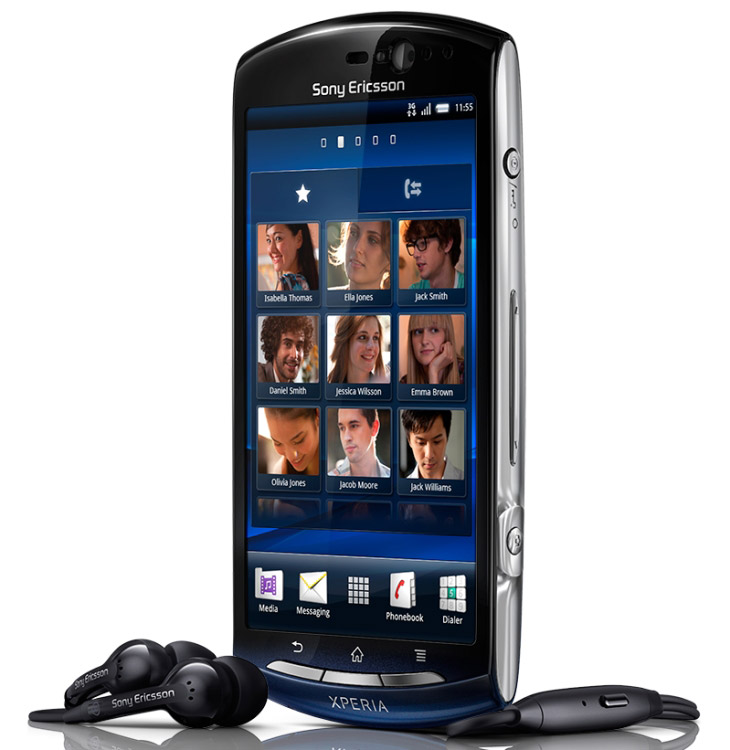
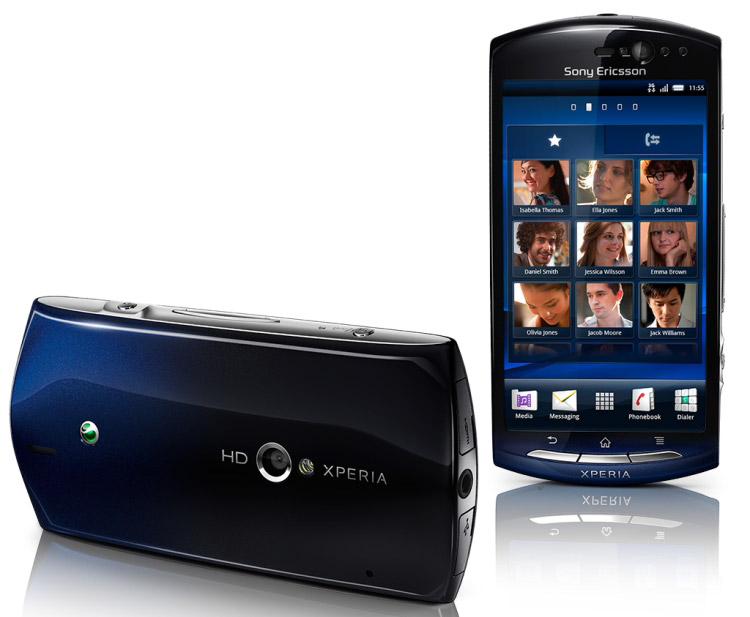
Sony Ericsson XPERIA Neo, Shot in HD!


The Sony Ericsson Xperia Neo was launched almost two years ago, in February 2011, but still remains a cool smartphone to have, as it looks great and holds a lot of features inside. Follow the next review and see what it has to offer – and I promise you: it’s quite a lot, given the fact that this fellow is almost two years old.

Key features

•    Quad-band GSM /GPRS/EDGE support
•    3G with 7.2 Mbps HSDPA and 5.76 Mbps HSUPA
•    3.7" 16M-color capacitive LED-backlit LCD touchscreen of FWVGA resolution (480 x 854 pixels) on Sony Mobile BRAVIA engine
•    Android OS v2.3 Gingerbread
•    1 GHz Scorpion CPU, Adreno 205 GPU, Qualcomm Snapdragon MSM8255 chipset
•    512 MB RAM
•    8 MP autofocus camera, LED flash, geotagging
•    720p video @ 30fps, continuous autofocus
•    Front facing VGA camera, video calls
•    Wi-Fi b/g/n and DLNA
•    GPS with A-GPS
•    microSD slot (32GB supported, 8GB card included)
•    Accelerometer and proximity sensor
•    Standard 3.5 mm audio jack
•    Stereo FM radio with RDS
•    microUSB port (charging) and stereo Bluetooth v2.1
•    Voice dialing
•    Adobe Flash 10.2 support
•    microHDMI port


In its box, you’ll see the charger, a microUSB cable used for both charging and making data transfers, an 8 GB microSD card, the headphones and some user manuals.

The Xperia Neo measures 116 x 57 x 13 mm and has a weight of 126 g, so it’s pretty slim and light, feeling comfortable in your hand and pockets. Even if it’s entirely made from plastic, the phone seems to be pretty well put together. Its design looks quite nice, having a sleek and a little bit glossy appearance, but standing far from giving a cheap impression. The only thing you’ll notice to be not so pleasing about it is that your fingerprints stick to it and you’ll have to clean it every once in a while or buy a cover for the back.
The frontal part of the phone’s body is dominated by a 3.7 inches LED-backlit LCD capacitive touchscreen that has a resolution of 854 x 480 pixels and a ~265 ppi pixel density. It’s powered by the Sony Mobile BRAVIA Engine and has, for protection, a scratch resistant glass. The colors offered by its display are pretty nice and vibrant, the contrast is good too. You’ll have no problems when looking at it under direct sunlight, as the phone offers a decent performance.


Above the screen, you’ll come across the earpiece, a front facing VGA camera for making video calls and the ambient light and proximity sensors.
Below the display are the hardware controls for Back, Home and Menu.
The left side holds nothing, meanwhile the right side is home for the volume rocker, Power/Lock key with a status LED next to it and the shutter button.
At the top reside the microHDMI and microUSB ports, which are protected by plastic flaps, and the 3.5 mm audio jack.


The Xperia Neo comes loaded with Android 2.3 Gingerbread (which is upgradeable to v4.0, Ice Cream Sandwich) and the Timescape user interface, which gathers your call logs, SMS, MMS, email, Facebook and Twitter updates. You can filter the displayed content by type, this way getting only what’s important for viewing. The phone is powered by a Qualcomm MSM8255 Snapdragon chipset, holding a 1 GHz Scorpion processor, Adreno 205 GPU, 320 MB of internal storage and 512 MB of RAM. Having these specs, the phone’s overall performance is great, offering a very pleasing user experience, without any lag issues, freezes and annoying stuff like that.

At the telephony department, we have a nice phonebook that’s capable of keeping tons of informations about your contacts, syncs with your online accounts (Exchange, Facebook, Twitter) and also has the quick contacts functionality. You have voice calling too and the possibility of making video calls.
The call quality was very good for both parties and I didn’t experience any reception problems either.
At the messaging section, your SMS and MMS are organized into threads and each thread is displayed as a conversation between you and your contact. You can copy, paste, lock your messages against deletion and even search for a certain message in your conversations.
For instant messaging, Google Talk has you all covered up, being compatible with clients like Pidgin, iChat, Kopete and others.


For emailing, you have Gmail, which supports batch operations, and a generic email application, that supports your other email accounts.
Typing is nice and comfy on the phone’s on screen virtual QWERTY keyboard offered by Gingerbread.
The Xperia Neo’s connectivity set features support for quad-band GSM/GPRS/EDGE, 3G with 7.2 Mbps HSDPA and 5/76 Mbps HSUPA, Wi-Fi b/g/n, DLNA, Wi-Fi Hotspot, Bluetooth 2.1 with A2DP, microUSB 2.0.

For surfing the web, you have a great browser that has support for Flash 10.1, double tap and pinch zooming, text reflow, multiple tabs and switching between them, bookmarks, find on page and others. The overall browsing experience is very nice, as the pages are loaded fast and look nice on the phone’s screen.
The Xperia Neo comes packed with an 8 megapixel autofocus camera that’s capable of taking pictures at a maximum resolution of 3264 x 2448 pixels and has a single LED flash for helping in low light situations. The camera’s app offers settings for touch focus, face and smile detection, geo-tagging, white balance and others. The image quality is very good, with accurate colors and good amount of detail.

The phone’s video camera is also very capable and it produces 720p videos at 30 fps.
For audio playback, the phone offers you a nice looking music player, which features several equalizer presets, the Infinite key for searching your tracks on YouTube and others. The audio quality is more than decent.
An FM Radio also resides here and comes with RDS support and supports the TrackID app for music recognition.
For watching videos, the phone’s video player only support MP4 and 3GP videos, so you might want to get another one, I suppose. Nevertheless, the image quality is excellent, thanks to the phone’s very capable display.

The Xperia Neo comes with the Office Suite for viewing Word, Excel, PowerPoint and PDF document files. Some other useful apps are the classic Calendar, Calculator, Alarms and others.
A GPS receiver is also here and has A-GPS support. For navigation, the Google Maps application is at your service.
The Xperia Neo has a 1500 mAh battery inside and will stay alive for almost a day and a half of moderate usage (at least, that’s how long it lasted in my hands).


In conclusion, the Sony Ericsson Xperia Neo is a pretty capable smartphone and will serve you well when it comes to taking pictures, browsing, watching movies and so on, being available at an affordable price.

continue reading "Sony Ericsson XPERIA Neo, Shot in HD!"

Wednesday, September 12, 2012

Samsung Galaxy, Pocket Rocket


With this new baby, the Galaxy Pocket, Samsung hits the low end market, a segment neglected for a long time now in which they were pretty comfortable at some point.
 In this Morloc underworld, life is far from boring, it can get pretty interesting sometimes, even if such devices often imitate their big brothers, at least in shape if not in content. Do not forget we’re talking about an android smartphone here, so let’s see what a low end smartphone means to Samsung:

Key Features

Quad-Band GSM and dual-band 3G support
2.8" 256K-color QVGA TFT touchscreen
832MHz ARMv6 processor, 289MB of RAM
Android OS v2.3.6 (Gingerbread) with TouchWiz UI
3 GB of internal storage, hot-swappable MicroSD slot (up to 32 GB)
2 MP fixed-focus camera with geotagging
GPS receiver with A-GPS
Wi-Fi 802.11 b/g/n, Hotspot functionality
Stereo FM radio with RDS
3.5mm audio jack
Accelerometer and proximity sensor
Swype text input
MicroUSB port (charging) and stereo Bluetooth 3.0
Social network integration

Full specs here.


As you can see, Galaxy Pocket is far for being your usual Nokia dumb phone, it’s a basic droid smartphone that can kick some butt. It still packs interesting features, in terms of connectivity with quad band GSM and dual band 3g, it has a GPS receiver built in and a Wi-Fi card for browsing Facebook and Tweeter for free, the touchscreen is capacitive, not resistive as in cheaper/older touchscreen models, the display also supports multi touch, it’s after all a multimedia device, it can play music and take photos and videos at decent quality, not to mention the expandable memory, all these features show us that cheap isn’t necessary a bad thing for Samsung.
The retail box is as simple as it gets, there is neither headset nor a data cable, just the charger and some manuals.

In terms of design, Samsung Galaxy Pocket is a very compact smartphone, its dimensions are 103.7 x 57.5 x 12 mm and it weighs 97 g; the chassis is made entirely of plastic and it fits any pocket with ease, as the name suggests. The chassis is the same as the one in Galaxy Y and the design is basic, function over form kind of thing, the smartphone is built around its 2.8 inch display with QVGA (240 x 320) resolution. The display is a mediocre one, images suffer from low contrast and are highly pixelated and sunlight legibility is not the best, to be franc, yet do not forget that we are talking about a very cheap device here.
Below the screen there are 2 capacitive keys, Menu and Back plus a physical one, the Home button.
Above the display, the earpiece and a proximity sensor that disables the touchscreen during calls.
On the top of the smartphone lays the 3.5 mm audio jack and a micro USB port, protected by plastic covers.
The back panel that covers the battery is made of plastic, but looks hard and sturdy, with a nice finish and without build quality issues. Here we also find the 2 Megapixels camera lens. Removing the back panel, reveals the 1200 mAh battery which is rated at  500h of stand-by and up to 5 h and 40 minutes of calls in 3G, during tests the phone lasted for about 2 days with pretty heavy use, not bad at all for a droid.
Overall, in terms of design, the phone feels cheap, which it is, but also very well built and as solid as they come, it’s also compact,  it offers a very good value for money, in my opinion.

The OS is Android Gingerbread 2.3.6 customized by Samsung’s own TouchWiz , powered by a single-core 832 MHz ARMv6 processor with 289 MB worth of RAM. Due to its low quality screen, the phone did remarkably well in test, the OS is running smooth and without glitches or noticeable lag.
The phonebooks is well organized, it is also Social Network Integrated, The application displays contacts stored in the SIM card, your Google account and in the phone memory.
Telephony is handled very well, trouble free, no issues with reception or in call sound quality, smart dialing is available and works very well.
The messaging and email interface is simple and efficient, as in any Android device, email is handled by the Gmail app which supports multiple accounts, the TouchWiz UI in the Galaxy Pocket features a combined inbox, which brings together all your mail in a single folder. Google handles the IM department too, The G-Talk network is compatible with a variety of popular clients like Pidgin, Kopete, iChat and Ovi Contacts.
The video player is basic, it can handle only  3GP and MP4 videos, forget about HD ones, the music player is TouchWiz, featuring equalizers and 5.1 channel virtualizations; you also get a built in radio with RDS with a simple interface. Audio output quality is impressing for such a cheap device, it was a nice surprise.
As for the camera, it’s a basic dated one, at 2 MP with fixed focus there are no expectations and no surprises, at least the interface is nice with some options as preset scenes and geo tagging. As for video recording, it’s hardly worth mentioning, The Pocket offers QVGA at 15 fps.
At least in terms of connectivity, Samsung Galaxy Pocket rocks, kind of, with quad-band GSM/GPRS/EDGE and dual-band 3G with HSDPA download rates of up to 3.6 Mbps.
The connectivity package also offers Wi-Fi (b/g/n), Bluetooth 3.0 with A2DP support and USB v2.0. GPS is on the list too, with A-GPS connectivity.
The Samsung Galaxy Pocket packs a pretty impressive 3 GB of internal storage but it comes with no SD card (the device supports micro SD cards of up to 32 GB.) supplied in the retail box, a cut down prices policy which sometimes gets annoying.

 Generally, the Android web browser is very good and surfing the web is a pleasure, but in this case with a poor 2.8 inch screen, you need a magnifying glass to read an article, you need lots of patience and nerves of steel. The browser doesn’t have Flash support but you have a YouTube app to compensate.

 The Galaxy Pocket comes with a GPS receiver built in, featuring Google Maps with Street View and voice guidance, as usual for droid devices.

In conclusion, if you are looking for a cheap and functional droid, this is as cheap as you will ever get. For this dirt cheap price, you get a not so bright screen and not so much processing power, but to be honest, for a regular user, an every day Joe, this smartphone offers plenty of features, and in my opinion, this is the whole point of an entry-level smartphone.

 You can have one here, on a monthly contract deal.


continue reading "Samsung Galaxy, Pocket Rocket"

Wednesday, September 5, 2012

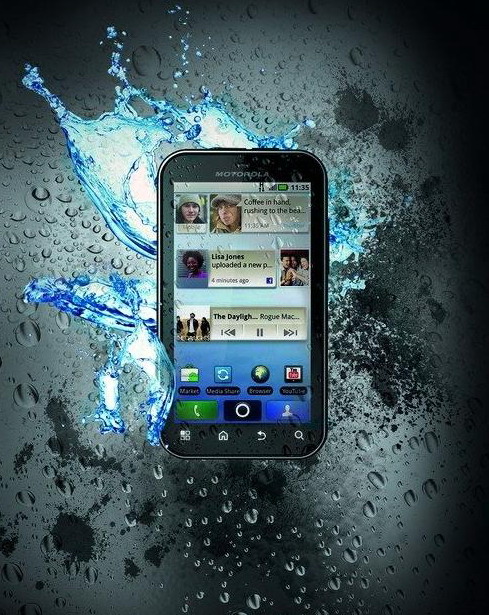
Motorola Defy, Roughneck Chronicles


Motorola Defy is not the droid you’re looking for if you’re that kind of geek hipster who likes pussy glam shiny slim touchy feely smartphones.
 No sir, this one is as tough as they come; I AM NOT AFRAID kind of device, GIVE ME YOUR BEST SHOT attitude.
 It’s a rugged, dust proof, scratch and water resistant Android GSM phone.
Wherever you go, this little guy will keep you connected to the world; it will survive you in the woods or in Afghanistan and your friends will appreciate your last gasp, as caught on the 5 MP Autofocus camera.
At first glance, let’s see the main ingredients:


Key features


World’s first durable Android smartphone
Scratch-resistant Gorilla Glass screen, dustproof and water-resistant (no official certification)
3.7" capacitive TFT touchscreen of WVGA (480 x 854) resolution, 16M colors
Quad-band GSM/EDGE, HSDPA 900/2100
Android OS 2.1 Éclair with custom MOTOBLUR UI
TI OMAP3610 800 MHz processor
512MB RAM, 2GB onboard storage
micro SD card slot (up to 16GB), 2GB card included
5 megapixel autofocus camera with LED flash and geotagging
VGA video @ 30fps
Wi-Fi and Bluetooth (with A2DP) connectivity
Built-in GPS receiver, digital compass
microUSB port, charging enabled
Standard 3.5 mm audio jack
FM radio with RDS
Accelerometer for UI auto-rotate
Active noise cancellation with a dedicated mic
Nice social networking integration
Swype text input
Web browser with Adobe Flash Lite
Very good audio quality
Awesome web-connected music player
Video player has Xvid video support

Full specs here.

In terms of software, Defy features the last MOTOBLUR User Interface, with Éclair android on board. Even if it doesn’t feature the latest and greatest in terms of software, this is not the boring type of device.
Unboxing the Defy reveals a small box, in which there are some basic accessories like the USB charger, a micro USB cable, a 2gb micro SD card and the usual headset plus the manual which teaches us not to submerge the phone in water with all of its lids open, a good advice kids.
The Defy is a compact unit, with a 3.7 inch wide display, measuring only 107 x 59 x 13.4 mm and weighing 118 g, very little for a full touch smartphone.
Motorola Defy is the first android who was said to meet the IP67 standards, but in the end Hello Moto decided not to give specific details about protection ratings, though the phone was marketed as dustproof, scratch resistant etc.
Anyway, this little one is as tough as they come, even If Moto doesn’t want to be held responsible for your droid getting messed up in the combat zone.
The Defy comes in 2 versions, all-black and white on black , on the front we can see the 3.7 inch touchscreen and the 4 capacitive buttons underneath, the display is a 16M-color capacitive touchscreen of WVGA resolution (480 x 854 pixels), which is covered by a scratch-resistant Gorilla Glass. Viewing angles and sunlight legibility are average, the image quality is pretty good for such a device, and the sensitivity of the touchscreen is excellent and supports multi touch.
The controls are haptic enabled and very sensitive, above the display there are the ambient and proximity sensors, on the left we find the micro USB  sealed with a rubber cap, on the top we can see the 3.5 mm audio  jack,  also protected with a flap.
On the back, the main attraction is the 5 MP with autofocus camera lens, with a LED flash. The battery has 1540mAh, it is a Li-Ion battery quoted at up to 238 hours of standby and 6 hours 48 minutes of talk time.
The design is very pleasant for a rugged phone, it looks more polished than most of them, the rubbery back cover is comfortably curved for a better handling, the phone fits well into your hand and the rubber provides a secure grip. The assembly is rock solid.
The OS is Android 2.1 Éclair and Motorola’s social-networking engine, MOTOBLUR. Widgets are the most interesting parts of home screen. And Motorola added excellent social networking skills and make the widgets resizable. Tap and hold on a widget and four handles will appear in the corners – you can drag them to resize the widget, which will change its appearance to fit the new size.
The phonebook is excellent, it can store all kinds of information about your contacts, it is social network integrated, the phonebook shows MOTOBLUR at its best – blurring the distinction between “local” and “online” and putting all the info from all the sources at your fingertips.
In terms of telephony, the device had no issues, reception is top notch, also the in call sound quality, due to the Crystal Talk technology, Motorola’s own active noise canceling method.
The Defy features voice dial and voice commands, Smart Dialing is missing in action.
The messaging app handles the text based communications in a unified box, threaded messaging is enabled too, and the text input is enhanced by Swype.
In terms of music, all the music related things are in the same place, the Music Videos section of the Music app offers quick searches on YouTube or Go TV for the music videos, in terms of audio quality, Moto did great, it can successfully replace your dedicated MP3 player with a good pair of cans.
The video player is minimalist; it supports DivX only up to WQVGA resolution (400x240). Higher-res videos seem to need more processing power than the DEFY can offer.
Defy comes with a built in FM radio with RDS, it has a simple yet efficient interface; you can listen to the internet radio too.
Camera is a 5 MP shooter with a maximum resolution of 2592Ñ…1944 pixels, the user interface is simple, the camera performed well but it’s not amongst the top dogs on the market, it’s average in terms of performance.
Video recording is handled well; the phone shoots very good clips at VGA resolution at 30 fps.
As per connectivity issues, there are none, the Motorola DEFY has great connectivity features – quad-band GSM/GPRS/EDGE fast dual-band 3G with 7.2Mbps downlink speeds and 2Mbps HSPA.
The local connectivity features include Wi-Fi b/g/n (with DLNA support), Bluetooth 2.1 with A2DP and a microUSB port.

For the avid internet user, the smartphone makes a good impression, the Android browser is very good, Flash support included, and browsing is fast and without glitches.

 The good people from Motorola did a great job of integrating social networking with the rest of the phone’s features, the Defy is a social phone, it also features a great organizer and a GPS receiver with Google Maps preinstalled and Street View Mode, for anything missing you can always pay a visit to the Android Market where you can find all kind of apps, free or paid.

Final words, this is a tough little droid, a wolf in sheep’s clothing, the right phone for the more physical active part of the geek audience, compact and friendly, young and social. It has a decent price tag and a full set of features; it’s a respectable smartphone who performs well in any situation.

 You can have your own Motorola Defy here, on a monthly contract deal.

continue reading "Motorola Defy, Roughneck Chronicles"

Saturday, September 1, 2012

LG Optimus, Black Label


Nobody can be told what Lg Optimus Black is, you have to see it for yourself. It’s black, sleek, elegant, android on board, Darth Vader’s first choice. Yes, it plays on the Dark Side of the force. At least, it’s cool enough for that. Like, you know, Darth Vader meets Angelina Jolie kind of thing. This is Lg Optimus Black on first sight. The display is pretty impressive, it was called NOVA, because in terms of brightness is almost a supernova, one of the best displays on the market.
Let’s see the main selling points of this black beauty:

Key features:


9.2 mm slim touchscreen bar
4” NOVA display at 700 nits of brightness, 16M-color WVGA capacitive IPS LCD unit
Quad-band GSM and dual-band 3G support
7.2 Mbps HSDPA and 5.76 Mbps HSUPA
Android OS v2.2 Froyo (upgradable to v2.3) with LG Home launcher 2.0 and Gesture UI 2.0
TI OMAP 3630 1GHz processor
512 MB RAM
5 MP autofocus camera with LED flash, face detection and geotagging
720p video recording at 30fps
2 MP front-facing camera with video calls
Wi-Fi b/g/n; Wi-Fi Direct and DLNA
GPS with A-GPS, digital compass
2GB storage (1GB user available); micro SD slot, 32GB supported (2GB card included)
Accelerometer, ambient light and proximity sensor
Standard 3.5 mm audio jack
Stereo FM radio with RDS
micro USB port (charging) and stereo Bluetooth v2.1
Smart dialing, voice dialing
DivX/XviD video support
Gesture controls with dedicated button
Adobe Flash 10.1 support
Document viewer/editor


With a 1GHZ single core processor and 512MB or RAM, sounds good enough to meet the parents, yet it is not a geek’s first choice, it’s mostly an all rounder than a spaceship.
Anyway, it has Wi-Fi direct technology and a 5Megapixels camera capable of shooting HD videos in 720p, ergo there are some brains under that beautiful sculptural black body.
The smartphone comes in a big box, I was expecting a Korean teenager to pop up and perform a lap dance, unfortunately all I found was the phone, the charger, the micro USB cable, a 2 GB micro SD card and a headset.

The front of the LG Optimus Black spans 122 x 64mm, which is compact for a 4” screen. At just 9.2 mm of thickness and 109 grams of weight, the Black will slip into almost any pocket problem free.
The display is big and bright, on of the best in the industry. Colors are bright and vivid, sunlight legibility is excellent, the viewing angles are ok, and overall, the NOVA display is the main attraction of the show.
In terms of design and construction, if you like the minimalist approach, it’s flawless, the build quality is perfect.

On the front panel you find the traditional set of proximity and ambient light sensors along with a 2MP front-facing camera.
Also, the usual Menu, Home, Back and Search controls all use the capacitive touch technology. The keys are haptic-enabled but that’s not all, upon a press, the backlighting of the key you touched changes color for a second, a very nice feature.
On the top of the smartphone we find the 3.5 mm audio jack, the micro USB port and the power lock key.
The camera lens is located on the back panel, naturally, right next to the LED flash.Removing the back panel, we find the  1500 mAh battery, the SIM and microSD card slots.
Optimus has an excellent design, it has a ligthweight super thin body which sits perfectly in hand, the back has a slight curvature that improves handling  and the matt plastic  looks and feels great. It’s a big screen phone with anorexia, if you’re into FTV, this is the device for you.

Optimus Black features Android 2.2.2 Froyo, Frodo’s cousin. Of course, it has the LG home custom launcher and the Gesture UI.
All these make the phone fun to handle. In terms of hardware, it packs a 1GHz single-core CPU and 512MB of RAM; it’s no head turner but also, nothing to be ashamed of.
In terms of telephony, it’s all nice and dandy, you have everything you need, good signal reception and in-call quality, smart dialer is available too, the loudspeaker sounds like a trumpet, everything is fine, let’s move along.

 LG Optimus Black can handle all common types of messages with ease - SMS, MMS and email. Email support is excellent with support for Exchange out of the box. The LG Optimus Black features a virtual QWERTY keyboard, which feature both portrait and landscape typing.
The music player looks stylish, it can do the usual like filtering by album or artist, unfortunately the audio quality doesn’t shine. You also get an FM radio with RDS.

The video player is simple and efficient, the interface is minimalist and it can play almost anything, from the usual 3GP and MP4 stuff along with WMV and AVIs using DivX and XviD. 1080p videos are a no go, due to the single-core processor. Still 720p videos work just fine.
LG Optimus Black comes with a 5 megapixel camera, capable of capturing 2592 x 1944 resolution images, it has geotagging and touch focus, also digital image stabilization, in terms of quality is nothing to write home about.
Video capture is HD, 720p, the videos have a fluid frame rate and the colors seem natural and vivid.
Connectivity is top notch, it has quad-band GSM/GPRS/EDGE for global roaming and three-band HSDPA with 7.2 Mbps of download and 5.76 Mbps of upload speeds (hypothetical ones). There’s also Wi-Fi b/g/n support, DLNA, Wi-Fi Direct and Hotspot capabilities.

The android web browser is excellent, with the help of that beautiful NOVA display; web browsing is very pleasant experience. The user interface is completely minimalistic, the browser is Flash-enabled and everything ran very smoothly.

The LG Optimus Black features great SNS integration. Both Facebook and Twitter contacts can be added to the phonebook and you can link those to existing phone contacts.
For extra apps, you can go to the Android Market where you can find almost anything you ever imagined and beyond.
 Optimus has a GPS receiver and it features Google Maps with 3d views and Google Street View.

Final words, Optimus Black is not a geek’s dream, not even the brightest of the bunch, but it has all the features you need from an android and a breath taking design, in my opinion of course. The NOVA display is one of the best on the market today, the phone is elegant, slim and light, it has a classy look, even if it’s not a high end device, it certainly looks like one.

You can get your own here, on a monthly contract deal.

continue reading "LG Optimus, Black Label "

Tuesday, August 28, 2012

Motorola Atrix, Enter the Dragon


For Motorola, the partnership with Android was truly a love story. It had ups and downs, like any relationship but it helped the telephony giant to emerge from the shadows.
 Atrix is the first smartphone from Motorola that features a dual core processor or the HDSPA + network, it marks a first for the company in many regards, let’s take a closer look:

Key features

Quad-band GSM and dual-band 3G with HSDPA and HSUPA
4" 16M-color capacitive touchscreen of qHD (960 x 540 pixels) resolution, scratch-resistant Gorilla glass
Dual-core 1GHz ARM Cortex-A9 proccessor, ULP GeForce GPU, Tegra 2 chipset; 1GB of RAM
Android OS v2.2; MOTOBLUR UI (update to Gingerbread planned)
Web browser with Adobe Flash 10.1 support
5 MP autofocus camera with dual-LED flash; face detection, geotagging
720p video recording @ 30fps (to be upgraded to 1080p Full-HD )
Wi-Fi ab/g/n; Wi-Fi hotspot functionality; DLNA
GPS with A-GPS; Digital compass
Fingerprint scanner that doubles as a power key
16GB storage; expandable via a microSD slot
Accelerometer and proximity sensor
Standard 3.5 mm audio jack
microUSB port (charging) and stereo Bluetooth v2.1 with A2DP
standard microHDMI port
Smart and voice dialing
Office document editor
Active noise cancellation with a dedicated secondary mic
DivX/XviD video support
Lapdock and HD Dock versatility
Web browser with Adobe Flash 10.2 support

Fulls specs here.

When it was launched, Atrix was the most powerful device ever made by the company; it featured a 1GHz dual-core processor, 1GB of RAM and the ultra low power GeForce GPU, an avenger in its time and place.
Add to that multimedia capabilities i.e.  a 5MP camera with dual LED flash and a 4-inch capacitive touchscreen of qHD resolution of 540x960 pixels, and the ATRIX 4G is more than ready to go where no other Moto droid has gone before.
Even now, it’s a remarkable smartphone, one year later. Ok, time to kick ass and chew bubble gum, but I’m all out of gum so let’s review this baby.

A short glimpse at the retail package reveals a pretty standard one, along with the smartphone you get a charger, a data cable, the HDMI cable(nice one Moto) but what is striking is the absence of both headset and micro sd card. So you must dig in your pockets if you want to play with the other kids.
The phone’s dimensions are 117.8 x 63.5 x 11 mm, the Motorola ATRIX 4G is quite compact for a 4” handset, in terms of design is very ergonomic and sits well in hand.
The display is humongous, 4.0 inch wide, qHD, with a resolution of 560 x 940 pixels. The capacitive touchscreen is very sensitive and the colors are sharp and vivid, brightness is one of the highest I’ve ever seen.
In terms of design, Motorola Atrix doesn’t shine, the phone is made of plastic without any traces of metal, the big screen is a scratch proof Gorilla Glass and the weight is about 135 grams.
An interesting feature, Atrix can scan your fingerprint to use it as screen lock security. Also, on the front of the phone you have an ambient light sensor and a proximity sensor.
On the left of the phone you find 2 ports, the micro HDMI and micro USB, the last one serves for charging and data connections.
 On the back panel, which has a carbon look finish, you find the 5 MP camera lens along with a dual LED flash.
Under the back panel there is a hot swappable micro SD card slot and a huge 1930mAh battery. Motorola quotes it at up to 400h of standby in 2G and 50h less in 3G mode. As to actual phone calls, the ATRIX 4G promises the pretty decent 9 hours.
In real life tests, the phone managed to last almost 2 days, not bad at all for such a monster screen and dual core processing power.
In terms of build quality, Atrix feels very well put together, the plastic is high quality and the general impression is one of sobriety and class.
The OS is Android 2.2.1 Froyo preinstalled, customized by Motorola with its social network-integrated MOTOBLUR UI.
In terms of day to day use, Atrix feels high end, the UI is snappy, due to the high amount of RAM and processing power, there is no lag in menus/apps whatsoever.
Telephony wise, Motorola Atrix had no problems with holding on to a signal or any reception issues while in a call. The phone also comes with smart dialing and active noise cancelation, called in this case CrystalTalkTechnology. Voice commands are here too, just like with the Motorola DEFY. They can be used to dial, send message and so on.
Messaging is a pleasure on Moto Atrix, all types of communication are handled in the messaging app, part of the social MOTOBLUR UI.
The camera on the Motorola Atrix 4G is a 5 megapixel one, capable of capturing pictures of 2592x1944 resolution. You get a dual LED flash for night photography, which doubles as a video light and a flashlight. In terms of image quality, is an average camera, not among the best on the market.
In terms of video recording, it can record HD 720p, clips are recorded smoothly at an acceptable frame rate.
Very good news from the video player, it supports both DivX and xvid codecs, also you get full HD mp4 video playback. The player itself is typical android, plain simple and efficient.
 The music players is also pretty decent, it supports all types of files,  including MP3/WAV/WMA/eAAC+ so you’re pretty much set for listening to music on the Atrix 4G.
Atrix provides excellent audio quality, both on headphones and on the internal speaker, a normal thing in this price range in my opinion.
Connectivity is top notch, Atrix offers quad-band GSM/GPRS/EDGE and quad-band HSDPA, capable of speeds up to 14.4 Mbps HSDPA and 5.76 HSUPA.
The local connectivity features include Wi-Fi a/b/g/n (with DLNA support), Bluetooth 2.1 with A2DP and a microUSB port.

Web browsing is a pleasant experience, the browser on Android Froyo packs Flash support.
You also have a GPS receiver with A-GPS technology which features Google Maps and Street View Mode.
With Atrix, it seems that Motorola is back in business, featuring a dual core power plant, copious amounts of RAM and a high end display, we have the recipe for a winner.

 You can have the phone for free on a monthly deal here.

continue reading "Motorola Atrix, Enter the Dragon"

Monday, August 27, 2012

Sony Ericsson Xperia X10, Seeing is Believing


Sony Ericsson Xperia X10 was meant to be the swan song of the company, their first android device and they want it to be absolutely perfect, both in terms of hardware and software. Perfection comes at a price; in this case it took them quite a long time to get there.
 Even if this was their first droid device, it’s not the kind of smartphone you can take it for granted and forget about it after the first date.
So let’s see the specs and the main highlights of this love child:

Key features

Quad-band GSM and tri-band 3G support
7.2 Mbps HSDPA and 2 Mbps HSUPA support
4" capacitive touchscreen of WVGA (480 x 854 pixel) resolution and scratch-resistant surface
16M-color ready (65K effective colors under Android OS v1.6)
Android OS v1.6 with complete Sony Ericsson UI customization
Timescape and Mediascape UI
Excellent social networking integration
Excellent build quality
Qualcomm QSD8250 Snapdragon 1 GHz CPU, OpenGL ES 2.0 support; 384 MB of RAM
8 MP autofocus camera with LED flash, touch focus, image stabilization, geotagging, face and smile detection
WVGA (800 x 480 pixels) video recording @ 30fps
Wi-Fi and GPS with A-GPS
1GB storage, microSD slot, bundled with an 8GB card
Accelerometer and proximity sensor
Standard 3.5 mm audio jack
microUSB port (charging) and stereo Bluetooth v2.1
Document viewer
Li-Po 1500 mAh (BST-41) battery
Great audio quality

Even if R&D for this phone took quite a while, when X10 hit the markets was on par with its rivals at the time of release.
First things first, let’s start with the retail package which resembles the one from iPhone, in terms of minimalist design and dimensions, which are petit to say the least.
In the box you can find a charger, the USB cable and a two piece headset easily upgradable due to the standard 3.5 mm jack.
The phone has a 4 inch display, pretty huge actually even with today’s standards, and that makes the device a big league player, it measures 119 x 63 x 13 mm and weighs 135 grams, not too much for such generous dimensions. This has to do with the absence of metal on the casing design but despite this, X10 is as solid as they come.
In terms of design, the phone is subtle and elegant; most part of the front is covered by the huge touchscreen. The 4" capacitive touchscreen unit has a resolution of 854 x 480 pixels and great picture quality.
 In terms of contrast and sun light legibility, this is as good as it gets on Sony Ericsson and the sensitivity of the screen is also excellent. Above the display we find the earpiece and the ambient light sensor is hidden on its left, a small status LED on the right. On top we find the 3.5mm audio jack, the power key and the micro USB port which is covered by a small plastic lid.
The back of the handset features the 8 megapixel camera lens and the LED flash. Camera lens has no protection so you should be careful with this baby. Under the battery you find the micro SD card slot which obviously is not hot-swappable. In terms of build quality, X10 is a tank, there are no creaks and the plastic parts are very well put together.
 On the back there is some matt plastic which is finger print proof and the front, well, you should give it a rub from time to time, and glossy plastic is not that hardcore.
As in later phones, X10 benefits from a design called Human Curvature, the phone feels very comfortable and smaller than it really is.
X10 runs on Android OS 2.1 (upgraded from 1.6) and the interface is customized with Timescape and Mediascape, in terms of hardware it comes with a fast 1GHz Qualcomm Snapdragon processor and the aforementioned 4 inch beast capacitive screen, UI runs smoothly and flawless.
In terms of telephony, Sony Ericsson X10 is strong, there are no problems with signal reception or call quality, the sound is loud and clear, unfortunately we don’t get smart dialing but if you ask me, I can live without it.
 As in most Sony Ericsson devices, audio quality is great, X10 is among the best in its class.
X10 features an 8 MP camera with LED flash capable of taking photos at a maximum resolution of 3264 x 2448 pixels, you have a bunch of options like four capturing modes and five focus modes available, it takes very  good photos with excellent detail and colors, but that’s normal for a Sony cyber shot. Video recording is captured in WVGA resolution (800 x 480 pixels vs. 720 x 480 for D1) at 30fps, in mp4 format with AAC audio codec.
In terms of connectivity, the force is strong with this droid, you get  quad-band GSM/GPRS/EDGE, three localized versions - each with tri-band 3G, 7.2Mbps HSDPA and 2Mbps HSUPA.
Local connectivity is well covered too – Wi-Fi b/g with DLNA, Bluetooth 2.1 with A2DP and file transfers.  There’s also a microUSB port for connecting with a PC.

 Web browsing is a pleasant experience on Android based devices, the browser is simple and efficient, pages load quickly and surfing is a pleasure on that high res screen.

 For business users, the phone comes with QuickOffice preinstalled   and it has support for viewing document files (Word, Excel, PowerPoint and PDF, including the Office 2007. Due to its big screen and fast processor, reading docs on X10 is a pleasant experience.

XPERIA X10 comes with a GPS receiver and Google Maps as application; the app supports Street View and Wise Pilot.

 In conclusion, Xperia X10 is a nice multi media tool, excellent for business users, browsing the web, taking pictures and riding social networks. Sony Ericsson did a great job with this first android flagship, even if there’s still some stuff needs polishing.


 You can have one on a monthly contract deal here.

continue reading "Sony Ericsson Xperia X10, Seeing is Believing"

Thursday, August 16, 2012

Samsung I9100 Galaxy S II, Want some Icecream?


Samsung Galaxy S2 is already a classic, millions of nerds cheered the new Android 4.0 Ice Cream sandwich, this new OS from Google is like a free hardware upgrade, it is that good, yes, with better battery life and improved performance. All these on a phone that makes you love the smell of android in the morning.
Galaxy S2, the brightest star until recently, one droid to rule them all. Yeah, it's easy to get carried away, when you look at Samsung’s very own Exynos chipset, the unmatched Super AMOLED Plus screen and the ultra-slim body.


So, let’s begin with a short list of goodies:
Key features:
• Quad-band GSM and quad-band 3G support
• 21 Mbps HSDPA and 5.76 Mbps HSUPA support
• 4.3" 16M-color Super AMOLED Plus capacitive touchscreen of WVGA (480 x 800 pixel) resolution
• Android OS v2.3.3 with TouchWiz 4 launcher
• 1.2 GHz dual-core Cortex-A9 CPU, Mali-400MP GPU, Exynos chipset, 1GB of RAM
• 8 MP wide-angle lens autofocus camera with LED flash, face, smile and blink detection
• 1080p HD video recording at 30fps
• Dual-band Wi-Fi 802.11 b, g and n support
• GPS with A-GPS connectivity; Digital compass
• 16/32GB internal storage, micro SD slot
• Accelerometer, gyroscope and proximity sensor
• Standard 3.5 mm audio jack
• Charging MHL micro USB port with USB host and TV-out (1080p) support
• Stereo Bluetooth v3.0
• FM radio with RDS
• Great audio quality
• Extremely slim waistline at only 8.5mm and low weight (116g)
• 2MP secondary video-call camera
• Full Flash support and GPU-acceleration for the web browser permit 1080p flash video playback
• NFC support (optional, not without a software update)
• Document editor
• File manager comes preinstalled
• The richest video format support we have seen


Samsung scored again. After the excellent sales that the first model Galaxy S had, here comes its worthy successor, called Galaxy S II. It is an ultra-compact and powerful smartphone, which had the best specifications at launch and still manages to maintain itself between the best smartphones on the market.
Galaxy S II was launched in February 2011 and still is one of the most popular Android phones on the high end segment. It is also one of the slimmest phones released so far, with only 8.5 mm in thickness it is equipped with a dual core 1.2 GHz processor and has 1 GB of RAM. The manufacturer has sold in the first 55 days of release over 5 million devices.

It arrived in a very small box, inside which there were instructions, a hands free headset with a 3.5 mm audio jack, the micro USB charger and a data cable. Besides all this you get a micro SD memory card of 8 GB.
From the beginning I noticed the small size of the smartphone, especially how thin it can be, actually is the thinnest smartphone yet, with a thickness of 8.5 mm. The other dimensions are normal for any smartphone with a 4.3-inch screen; Galaxy S comes with a length of 123.5 mm and a width of 66.1 mm. It weighs only 116 grams. Almost anorexic.
You get a massive screen in a body so slim, the new Galaxy beats the predecessor on every count: bigger, slimmer, sharper, faster more. Cherry on top, the handling is even better.
The display is a Super Amoled Plus that retains WVGA resolution, one word to describe it : SUPERB. Samsung knows how to make a high end capacitive unit, drop of the hat. It is also very power efficient, has perfect viewing angles and a great sunlight legibility.
The rear has an excellent design and here we find the 8 megapixel camera with LED flash. Under the back cover is the battery with a capacity of 1650 mAh, together with a SIM card slot. To access the memory card you must remove the battery. According to the manufacturer, it provides a range of 710 hours of standby time in 2G or 610 hours in 3G, and a talk time of 18 hours and 20 minutes in 2G and 8 hours and 40 minutes in 3G. Depending on how intense you use it, S2 can withstand two - three days, but you can also drain it in a single day of heavy use.

S Galaxy II comes with Android 2.3.3 Gingerbread easily upgradeable to Ice Cream Sandwich, over which runs the user interface TouchWiz 4.0.
In terms of hardware, Galaxy S II is powerful enough to impress even the most demanding user. It can run any application without breaking a sweat because it is equipped with a dual core 1.2 GHz processor and 1 GB of RAM, all these make it a real monster, it has more juice than many netbooks on the market. The 400 MHz dedicated graphics processor provides the necessary performance in games.
Galaxy S II comes equipped with 16 or 32 GB internal memory, but you also have the possibility of expanding it via the Micro SD card slot, up to 32 GB extra. S2 comes with an 8 GB card already inserted.
Telephony is great, voice commands are easy. The video player offers a simple list-based interface. The battery life playing videos is impressing, it endured over 8 hours of playback; audio output is also very good. The Samsung I9100 Galaxy S II comes with an 8MP auto-focus camera for photos of up to 3264 x 2448 pixel resolution. It comes with an LED flash but nothing in the way of lens protection or physical shutter key. The Full HD video recording is top-notch, full of detail, low in noise and generally, nice and smooth.
Galaxy S II is the dream of every mobile internet user. Besides the Wi-Fi b / g / n , HSPA speeds reach 21 Mbps download and 5.76 Mbps upload. With the right internet subscription, you will have a very good speed even without Wi-Fi.
The web browser is excellent and very fast, due to the excellent processor and abundant memory.
You also get a GPS receiver with Google Maps preinstalled; the large screen makes the phone to be very suitable for in-car GPS navigation.
Bottom line, Samsung Galaxy S2 is an easy phone to recommend, it has everything, it’s the ultimate smartphone. You can check out our monthly contract deals and get yourself a royal treat.
continue reading "Samsung I9100 Galaxy S II, Want some Icecream?"