Popular Posts

Thursday, September 6, 2012

Nokia E6, Old School Business Phone


It’s time to say goodbye to your good ol’ friends, E71 or E72 and make room for their smarter sister, the E6. They’re not going to be jealous or anything, I’m sure they’ll completely understand and nicely step aside.
The E6 offers a more user-friendly interface, better text input, faster browser and comes with Ovi Maps 3.06 pre-installed. Actually, you have to thank the new Symbian Anna upgrade for these features.
It’s a stylish phone and they didn’t save any metal when designing it, refining the winning recipe from a few years ago. The more pronounced rounded edges and its stainless steel battery cover will immediately come out and the smartphone gives the impression of solidity and quality of construction.

Key features


• Quad-band GSM/GPRS/EDGE support
• Penta-band 3G with 10.2 Mbps HSDPA and 2 Mbps HSUPA
• Symbian Anna OS
• Messenger bar, stainless steel body, four-row QWERTY keyboard
• 2.46" 16M-color capacitive TFT touchscreen of 640 x 480 pixel resolution; Gorilla glass protection
• 680 MHz ARM 11 CPU and 256 MB RAM
• 8GB internal storage, 1GB ROM, microSD card slot
• Wi-Fi 802.11 b/g/n
• GPS receiver with A-GPS support and free lifetime voice-guided navigation
• Digital compass
• 8 megapixel fixed-focus camera with dual-LED flash, 720p video recording @ 25fps; geotagging, face detection, smart zoom in video
• Built-in accelerometer and proximity sensor
• Standard 3.5 mm audio jack
• Stereo FM Radio with RDS
• microUSB port, USB-on-the-go
• Flash and Java support for the web browser
• Stereo Bluetooth 3.0
• Smart dialing and voice commands
• DivX, XviD and Matroska video support
• Social network integration
• Office document viewer and editor
• Excellent battery life
• Excellent audio quality.

Full specs here.

The QWERT keyboard seems to be fully taken from its predecessor, I noticed no difference between the E72’s and the E6’s keyboards. Underneath the touchscreen display of 2.46 inch and with a 640 × 480 pixel resolution you can find the capacitive buttons.
Its blue box contains the phone’s microUSB cable, charger and headset. No microSD card.
On its top side, you’ll find the microSD card slot, 3.5mm jack and the classic Nokia Power key. The bottom hosts the charger port.
On the left side is the microUSB port, on the right you’ll see the volume rocker, with a middle key used for activating voice commands and the lock key, which can be used for turning the dual-LED flash to serve as a flashlight.
The E6’s hardware is more than satisfying, the 680 MHz processor, 256MB of RAM, 1GB ROM and 8GB storage make a more than satisfying combination that gets the job done. The 1500 mAh battery provides a decent range of 3 to 4 days under moderate usage.
The reception is good and the call quality is flawless, as I’ve expected it to be. Nokia is well known for its excellent services when it comes to telephony. Smart and voice dialing are also here, among with the possibility of video calling.
This phone is a god when it comes to messaging. I mean it. The messaging service is pretty much a standard texting application, the mail application supports Yahoo Mail, Gmail, Hotmail, Ovi Mail. For instant messaging, the Chat application allows you to use Yahoo Chat, Google Talk, MSN, ICQ and Ovi Chat. Texting will be a wonderful experience thanks to the QWERTY keyboard on this phone, which is a sweetheart.
When it comes to connectivity, there’s nothing missing from what a business client would need. This phone comes with 3G with HSPA (10.2 Mbps HSDPA and 2.0 Mbps HSUPA), GPRS, EDGE, Bluetooth 3.0 and 802.11b/g/n Wi-Fi with WEP, WPA, WPA2 (AES/TKIP) encryption protocols.
Symbian Anna offers an improved web browser, the pages are loaded faster and everything related to browsing is better on the E6, if you compare it to the features given by Symbian^3.
The E6 comes with an 8 megapixel camera, that takes pictures at a maximum resolution of 3264 x 2448 pixels and has a dual-LED flash. The photo quality is fine, but lacks autofocus. The video recording is very good, the phone shoots in 720p resolution at 25 fps, offering digital image stabilization and 3x digital zoom.
You also have an image and video editor. The image editor allows you to rotate, resize, crop, apply effects to your pictures and with the video editor you can create slideshows from your photos or create/edit videos from your images and videos.
The music player supports a lot of formats, such as MP3, WAV, MIDI, WMA, AAC/AAC+/eAAC+, AMR-NB, AMR-WB.  You get an equalizer and a stereo widening feature. The sound quality is excellent, loud and clear, as it should be and the headphones are pretty decent. Stereo FM radio with RDS is also present.
The video player is very good and it comes with support for AVI, MP4, MKV, WMV, H.264/H.263. The image quality is great.
If you need some maps and satellite navigation, the phone provides a very useful application, Ovi Maps, that includes free  Navteq-based global maps, voice guidance, speed limit and traffic information.
The E6 is generous when it comes to helpful applications. One of them is Quickoffice, that can view and edit Word, Excel and PowerPoint documents. For PDF files, you get the Adobe Acrobat app. If you’re needing a multi-lingual dictionary, the Dictionary application will come in very handy and if you want to hear your text messages, the Message Reader will read them to you.
The glorious days when the E71/72 were popular and appreciated are over. I’m sorry, E-series fellows, but it’s time to let the E6 to proudly take your place. Made on Nokia’s classic recipe for the business area, this phone is clearly a step forward, offering a lot of handy features and applications and is capable of pleasing even the most needy business user.

 You can have your own E6 on a mobile phone deal here.

continue reading "Nokia E6, Old School Business Phone"

Wednesday, September 5, 2012

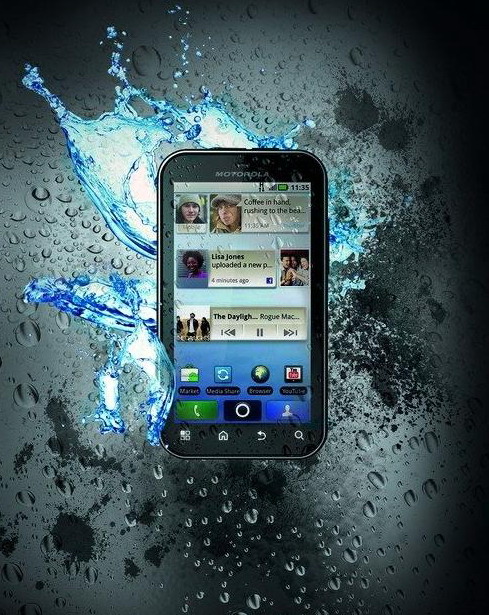
Motorola Defy, Roughneck Chronicles


Motorola Defy is not the droid you’re looking for if you’re that kind of geek hipster who likes pussy glam shiny slim touchy feely smartphones.
 No sir, this one is as tough as they come; I AM NOT AFRAID kind of device, GIVE ME YOUR BEST SHOT attitude.
 It’s a rugged, dust proof, scratch and water resistant Android GSM phone.
Wherever you go, this little guy will keep you connected to the world; it will survive you in the woods or in Afghanistan and your friends will appreciate your last gasp, as caught on the 5 MP Autofocus camera.
At first glance, let’s see the main ingredients:


Key features


• World’s first durable Android smartphone
• Scratch-resistant Gorilla Glass screen, dustproof and water-resistant (no official certification)
• 3.7" capacitive TFT touchscreen of WVGA (480 x 854) resolution, 16M colors
• Quad-band GSM/EDGE, HSDPA 900/2100
• Android OS 2.1 Éclair with custom MOTOBLUR UI
• TI OMAP3610 800 MHz processor
• 512MB RAM, 2GB onboard storage
• micro SD card slot (up to 16GB), 2GB card included
• 5 megapixel autofocus camera with LED flash and geotagging
• VGA video @ 30fps
• Wi-Fi and Bluetooth (with A2DP) connectivity
• Built-in GPS receiver, digital compass
• microUSB port, charging enabled
• Standard 3.5 mm audio jack
• FM radio with RDS
• Accelerometer for UI auto-rotate
• Active noise cancellation with a dedicated mic
• Nice social networking integration
• Swype text input
• Web browser with Adobe Flash Lite
• Very good audio quality
• Awesome web-connected music player
• Video player has Xvid video support

Full specs here.

In terms of software, Defy features the last MOTOBLUR User Interface, with Éclair android on board. Even if it doesn’t feature the latest and greatest in terms of software, this is not the boring type of device.
Unboxing the Defy reveals a small box, in which there are some basic accessories like the USB charger, a micro USB cable, a 2gb micro SD card and the usual headset plus the manual which teaches us not to submerge the phone in water with all of its lids open, a good advice kids.
The Defy is a compact unit, with a 3.7 inch wide display, measuring only 107 x 59 x 13.4 mm and weighing 118 g, very little for a full touch smartphone.
Motorola Defy is the first android who was said to meet the IP67 standards, but in the end Hello Moto decided not to give specific details about protection ratings, though the phone was marketed as dustproof, scratch resistant etc.
Anyway, this little one is as tough as they come, even If Moto doesn’t want to be held responsible for your droid getting messed up in the combat zone.
The Defy comes in 2 versions, all-black and white on black , on the front we can see the 3.7 inch touchscreen and the 4 capacitive buttons underneath, the display is a 16M-color capacitive touchscreen of WVGA resolution (480 x 854 pixels), which is covered by a scratch-resistant Gorilla Glass. Viewing angles and sunlight legibility are average, the image quality is pretty good for such a device, and the sensitivity of the touchscreen is excellent and supports multi touch.
The controls are haptic enabled and very sensitive, above the display there are the ambient and proximity sensors, on the left we find the micro USB  sealed with a rubber cap, on the top we can see the 3.5 mm audio  jack,  also protected with a flap.
On the back, the main attraction is the 5 MP with autofocus camera lens, with a LED flash. The battery has 1540mAh, it is a Li-Ion battery quoted at up to 238 hours of standby and 6 hours 48 minutes of talk time.
The design is very pleasant for a rugged phone, it looks more polished than most of them, the rubbery back cover is comfortably curved for a better handling, the phone fits well into your hand and the rubber provides a secure grip. The assembly is rock solid.
The OS is Android 2.1 Éclair and Motorola’s social-networking engine, MOTOBLUR. Widgets are the most interesting parts of home screen. And Motorola added excellent social networking skills and make the widgets resizable. Tap and hold on a widget and four handles will appear in the corners – you can drag them to resize the widget, which will change its appearance to fit the new size.
The phonebook is excellent, it can store all kinds of information about your contacts, it is social network integrated, the phonebook shows MOTOBLUR at its best – blurring the distinction between “local” and “online” and putting all the info from all the sources at your fingertips.
In terms of telephony, the device had no issues, reception is top notch, also the in call sound quality, due to the Crystal Talk technology, Motorola’s own active noise canceling method.
The Defy features voice dial and voice commands, Smart Dialing is missing in action.
The messaging app handles the text based communications in a unified box, threaded messaging is enabled too, and the text input is enhanced by Swype.
In terms of music, all the music related things are in the same place, the Music Videos section of the Music app offers quick searches on YouTube or Go TV for the music videos, in terms of audio quality, Moto did great, it can successfully replace your dedicated MP3 player with a good pair of cans.
The video player is minimalist; it supports DivX only up to WQVGA resolution (400x240). Higher-res videos seem to need more processing power than the DEFY can offer.
Defy comes with a built in FM radio with RDS, it has a simple yet efficient interface; you can listen to the internet radio too.
Camera is a 5 MP shooter with a maximum resolution of 2592х1944 pixels, the user interface is simple, the camera performed well but it’s not amongst the top dogs on the market, it’s average in terms of performance.
Video recording is handled well; the phone shoots very good clips at VGA resolution at 30 fps.
As per connectivity issues, there are none, the Motorola DEFY has great connectivity features – quad-band GSM/GPRS/EDGE fast dual-band 3G with 7.2Mbps downlink speeds and 2Mbps HSPA.
The local connectivity features include Wi-Fi b/g/n (with DLNA support), Bluetooth 2.1 with A2DP and a microUSB port.

For the avid internet user, the smartphone makes a good impression, the Android browser is very good, Flash support included, and browsing is fast and without glitches.

 The good people from Motorola did a great job of integrating social networking with the rest of the phone’s features, the Defy is a social phone, it also features a great organizer and a GPS receiver with Google Maps preinstalled and Street View Mode, for anything missing you can always pay a visit to the Android Market where you can find all kind of apps, free or paid.

Final words, this is a tough little droid, a wolf in sheep’s clothing, the right phone for the more physical active part of the geek audience, compact and friendly, young and social. It has a decent price tag and a full set of features; it’s a respectable smartphone who performs well in any situation.

 You can have your own Motorola Defy here, on a monthly contract deal.

continue reading "Motorola Defy, Roughneck Chronicles"

Tuesday, September 4, 2012

HTC Desire C, In The Lap Of The Gods


Oh, hi, cutie pie! I bet everybody’s wondering about how did HTC manage to use ANDROID 4.0 ICS on this little thing, with a processor of only 600MHz ? Was it magic ? What was it ? Let’s take a look!


Key features:

Light and compact
Quad-band GSM and dual-band 3G support
14.4 Mbps HSDPA, 5.76 Mbps HSUPA support
3.5" 16M-color TFT capacitive touchscreen of HVGA resolution (320 x 480)
600MHz single-core Qualcomm Snapdragon S1 MSM7227A chipset, Cortex A5 CPU, 512MB RAM, Adreno 200 GPU
Android 4.0 (Ice Cream Sandwich) with HTC Sense 4 UI
Wi-Fi 802.11 b/g/n with hotspot functionality
GPS with A-GPS connectivity
5 MP camera, geotagging, face detection
VGA video @ 24fps
microUSB port (charging) and stereo Bluetooth v3.0
microSD slot (up to 32GB)
Standard 3.5 mm audio jack
Accelerometer, proximity sensor
Polaris Office doc viewer / editor
25GB of free Dropbox
Stereo FM radio with RDS
Smart dialing
DivX/XviD video support
HTCSense.com integration
Adobe Flash support
Surprisingly good audio output

Full specs here.


In its box, you will find the standard microUSB cable, a headset and the charger. You won’t find a microSD card, unfortunately.
 Desire C is  very light and compact, having a weight of 100 grams and measuring 107.2 x 60.6 x 12.3 mm. Fits perfectly in my hand. When I first looked at it, I was under the impression that it’s even smaller and I wouldn’t have thought that its display measures 3.5 inches. Well, it does.
It’s made of plastic, has a metallic frame that encases the screen and its back is made of rubberised plastic, for a better hand grip.
Under the screen you’ll find the three capacitive buttons: back, home and task switcher. On the left side is the microUSB port, used for both charging and connecting to the computer and on its right side is the volume rocker. At the top, there’s the power/lock button and the 3.5mm headphone jack. On the bottom you’ll only find the mouthpiece.
Though it’s kind of puny, we must not underestimate it. This dwarfish looking fellow has a lot to give. For example, the latest version of  Google’s operating system,  Android 4.0 Ice Cream Sandwich, and the interface is colourful and user friendly, as Sense 4.0 is also present on the device.
The call quality is fine and also the reception. If you’re expecting video calling, it’s not there, unfortunately. If it makes you feel any better, you get Smart dialing.
For messaging, you have a lot of options, like the Mail and Gmail applications or Google+ Messenger. The QWERTY touch keyboard has been optimized for its 3.5 inch display, they used as much space as they could for that. You can easily write a message or mail.
The HTC Desire C comes with 3G connectivity, Wi-Fi b/g/n, Bluetooth 4.0, and quad-band GSM/GPRS/EDGE.
For browsing, you’ll have the latest Android browser and you can also install Chrome for Android. Flash support is also there. The browsing speed is not too great, if you ask me. And I’m a pretty patient person.
Desire comes with a HTC Portable Hotspot application, which enables you to gain web access at a high speed.
Another issue can be the fact that when the phone’s running multiple applications or when you quickly move through the menu, you may sometimes meet the unfriendly and annoying lag. But, we got to think about the class to which it belongs and not ask high-end performances from it. There are dual-core phones with delays and this one only has a 600 MHz processor.
The phone has a 5MP fixed-focus camera that lacks a shutter key and a LED flash. It takes pictures at up to 2592 x 1944 pixels and records VGA at 30 fps. The picture quality is neither bad or great. It’s… decent enough.
Desire C features the Beats Audio sound enhancement, which should certify a perfect sound quality.  Well, I must say it’s really great. The phone supports all the important music formats, as MP3, WAV, WMA. Doesn’t have Beats Audio presets, as you might have expected. On board, you’ll also find music library, some useful apps, like SoundHound, TuneIn Radio and 7 Digital, for downloading some new music stuff.
When it comes to video playing, it supports the main formats, like AVI, WMV and MP4. So stop day-dreaming about 720p/1080p videos.
In the matter of battery life, it stands very well. Even though it has a 1,230mAh battery, the phone will be alive for more than a day even if you frequently use it for calling, browsing, messaging etc.
Let’s talk about a few useful applications. The HTC Desire comes with Google Maps pre-installed. So, if you get lost, the A-GPS will take care of the helpless wittle you. A great tool is the Polaris application, that has support for Word, PowerPoint, Excel and also has a PDF viewer. Quite neat, huh ? Dropbox and SkyDrive are also here, enabling you to browse your documents stored on the cloud based system. For music recognition, you get SoundHound.

In conclusion, you have to appreciate that this little cupcake of a phone is really trying to keep up with the other giants in the smartphone family and does a pretty good job, if you come to think about its noobish processor and other minuses that I have pointed in the review. Even though it has some low performances, the HTC Desire C is still a decent phone, has a cute design and is also cheap. You just can’t dislike it!

 You can have your own HTC Desire C on a monthly contract deal here.

continue reading "HTC Desire C, In The Lap Of The Gods"

Monday, September 3, 2012

HTC HD2, Power Puff Dragon!


I think that HTC’s HD2 is the fastest smartphone of its year of apparition, with the largest capacitive display you could have found on the market at that time and with one of the best designs in the world of modern smartphones. A true monster  pocket-PC, powered  by a Snapdragon, Godzilla meets  Bruce Lee, drop of the hat,this HTC is Rock and Roll:

Key features


• Huge 4.3" 65K-color WVGA glass-covered capacitive touchscreen
• Multi-touch input
• Windows Mobile 6.5 Professional OS with Sense UI
• Qualcomm Snapdragon QSD8250 1 GHz CPU and 448MB RAM
• Quad-band GSM support
• 3G with HSDPA 7.2Mbps
• Wi-Fi connectivity
• Built-in GPS receiver with A-GPS support
• Stereo FM radio with RDS
• 5 MP autofocus camera with dual LED flash and touch focus
• VGA video recording at 30fps
• microSD card slot
• Standard microUSB port and Bluetooth v2.0 with A2DP
• Standard 3.5mm audio jack
• Great audio quality
• MS Office Mobile document editor
• Opera 9.5 web browser
• YouTube client, Facebook and Twitter integration
• Excellent video playback performance
• Good battery life

For full specs, you can visit here.


In its box, you’ll find the charger, microUSB cable, headset, 2GB microSD card, software CD and, guess what ? A phone covering! Isn’t that cute ?

In addition to the ROM update, HTC has released two official updates (one for correcting problems arising in pictures, and one for some problems with SMS)  plus an unofficial one on XDA, where the 3D hardware acceleration is enabled for playing games.

HTC HD2 has a very cool, almost dramatic design that almost screams “Hey, look at me, look at me!”
The company keeps an eye on the industry trends and preferences or user specifications and produces the right, catchy and attractive models. Given that they no longer produce models exclusively dedicated to the business area and is offering Android devices too, HTC is careful that its smartphones please the general public in terms of appearance, that proves to be well finished and covered with quality materials.

The large 4.3 inches screen covers almost the entire surface of the phone. The remaining room is taken by five control buttons (call, home, menu, back and end call). They don’t stand out in relief and if you want to identify them by touch (say when it's dark and you want to use the device without looking at it), you'll have some problems. I'd say they are too small compared to the size of the screen and the whole device. It is still a matter of personal taste. They’re constructed from a black plastic and fit perfectly in the frontal part of the HTC HD2.

It is also immediately noticed that HTC HD2 is very thin. 11 mm is truly an achievement when you consider the old models of HTC. Or even in comparison with Touch Diamond2 (13.7 mm). The back of the HTC HD2 reserves another pleasant surprise: a combination of rubberized plastic for the external areas and a metal cap that gives a sense of style, elegance and solidity. And let’s not forget about the 5 megapixel camera with dual flash and external speaker!

The surface on the HD2’s backside is not flat. It has a curved aspect that contributes to a better hand grip. At the same time, the curve can be a disadvantage if you mostly use the device on your desk:  because of its curved shape, it will swing from left to right and will have to be kept fixed by your hand. Again, a matter of preference.

The design ends with the volume control button positioned on the left side. Very easy to use, easy to identify on the case and, though it’s also kind of concealed. The charger port and the audio one can be found at the bottom of the device in the center. They’re next to eachother, but the separating distance is perfect for allowing you to use it without problems.

The 3.5 mm jack seems to have become the standard one for HTC. I’m glad to see this. What I don’t like is the option of using a microUSB slot for connecting / charging instead of miniUSB. It is very clear that they opted for the microUSB to gain space and thus can create a thin device. However, I would have preferred a miniUSB.

On the hardware side, the HTC HD2 stands very well. A 1 GHz Qualcomm Snapdragon processor and a combination of 512 MB ROM and 448 MB RAM (which could smoke any PC from ten years ago in terms of hardware power) plus a microSD slot. This combination is the dream of every IT and gadgets enthusiast.  It also has a proximity sensor (can turn the screen off during a call) and a sensor for ambiental light (the brightness automatically adjusts depending on the amount of light in the area), plus the accelerometer, made only for optimized HTC applications.

The HTC HD2 comes with a WiFi receiver(802.11 b / g), aGPS support, quad band GSM, 3G/GPRS/EDGE connectivity and compass.

Let’s talk about the camera. It’s a 5MP camera with autofocus and the ability to change the area of focus by touching the desired object, plus two LEDs doing their job quite well in lower light conditions. The picture quality is fine when the light conditions are proper. The only problem is that the dual flash is way too bright, this issue can be quite disturbing at some point. Your dog may bite you when trying to take its picture in an artificial-illuminated environment.

The same happens with the option of shooting. You can film very fine at 30 fps with 640 x 480. Altogether, HD2’s camera has a limited performance.

Who needs an mp3 player when this phone does such a wonderful job ? The music sounds very nice on this phone, you’ll be pleased. I know I was. Another “pro” on the list is that the 3.5mm jack allows you to use your favorite headset.
The 1230mAh battery lasts longer than 24 hours even if you browse, take pictures and do all sorts of phonelife-sucking stuff.

Overall, this phone’s totally worth it, you won’t be disappointed of it, I give you that. Way to go, HTC!

For a monthly contract deal on HTC HD2, please visit us here.

continue reading "HTC HD2, Power Puff Dragon!"

LG Optimus 7, Lucky Number Slevin


After HTC, another Asian company decided to move into uncharted territory, I am talking here about smartphones running Windows Phone 7 OS.
 With Optimus 7, we see the first step from LG in this direction. Regardless of the hardware restrictions imposed by Microsoft, Optimus 7 is trying to distinguish itself from the crowd, with a nice design and excellent assembly quality of the device. All Windows 7 smartphones require state of the art hardware and this is not a bad thing for the end user, just a little bit of a drag from the manufacturer’s point of view. Let’s see the main specs of Lg Optimus 7:

Key features:

• 3.8" 16M-color capacitive TFT touchscreen of WVGA resolution (480 x 800 pixels)
• Quad-band GSM/GPRS/EDGE support
• 3G with HSDPA (7.2 Mbps) and HSUPA (5.76Mbps)
• Windows Phone 7 operating system
• 1GHz Snapdragon CPU, 512MB RAM
• 5 megapixel autofocus camera with LED flash and geo-tagging; Panorama photos with the Panorama shot app
• 720p video recording @ 24fps
• 16GB of built-in storage
• Standard 3.5mm audio jack
• Standard micro USB port (charging)
• Wi-Fi b/g/n; DLNA support via PlayTo
• Bluetooth 2.1 with A2DP
• Accelerometer for screen auto rotation
• Landscape on-screen QWERTY keyboard
• FM radio with RDS
• Office document editor
• Social networking integration
• Built-in A-GPS receiver
• Comes with a choice of free apps via LG AppStore
• Voice-to-text functionality
• ScanSearch augmented reality app

Full specs here.


To make their baby unique, LG added a few applications, like the PlayTo app that gives the phone DLNA capabilities, the Panorama application for the 5 MP camera and Scan Search for weather forecasting and for using your phone as a guide when you’re searching for a good cup of coffee. It’s not much but nevertheless, LG tried to customize the device as humanly possible, following the strict guidelines from Microsoft.

At 3.8 inches wide, Optimus 7 has a pretty small display, compared with other Windows Phone 7 devices, but it compensates with a smaller retail price. And this is kind of important, because all WP7 phones are more or less the same in terms of hardware, so the price tag should play a significant role in choosing this kind of product.

LG’s retail package is modest, it contains the normal accessories with no extras, like the micro USB cable, the charger and the hands free set.
 There’s no micro SD card in the box, but this is by no means a deal breaker, Optimus comes with 16 GB of internal memory which is a lot.

The smartphone measures 125 x 59.8 x 11.5 mm and weighs 157 grams, it’s a pretty big and heavy device. But it impressed me with its rock solid build quality, the housing is made of metal, with round shaped corners, it is an elegant and neutral design.

The screen is a TFT LCD 3.8” and has WVGA resolution, the colors are nice and bright, sunlight legibility is average and viewing angles are pretty normal for this kind of display.
On the front panel we find the usual proximity/ambient light sensors, the earpiece and the three keys mandated by Windows Phone 7 – Back, Windows and Search. On the right we find the micro USB port that serves both at data transfer and for charging the smartphone. On the back panel is the 5 MP camera lens with autofocus, led flash and a small mirror for self portraits. Under the metal cover we find a pretty decent 1500mAh Li-Ion battery which lasted for about 2 days with heavy use.
The nice curved design of Optimus 7 is very comfy to hold and the matte plastic on the front plus the brushed metal on the back panel are fingerprint resistant.
As for OS, all WP7 phones run the exact same software, with just a couple of preinstalled apps that make some difference.

The phonebook is very well integrated with social networking, the People hub shows you a list of all your contacts (phone contacts, social network friends, email pen friends – everything), with a search shortcut and an add contact button.
In terms of telephony, LG Optimus 7 scored pretty average, the in call sound quality is good and the signal reception is trouble free in most areas. Unfortunately, Optimus 7 lacks smart dialing.

The messaging department of Windows Phone 7 is pretty basic, efficient and almost the same in any device regardless of the manufacturer, it uses threaded view to organize your messages, you’ll see a list of conversations – each conversation consists of multiple messages visualized as speech bubbles, which are ordered by the time they were sent/received.

The multi media department is covered by Zune, both music and video player. They both have pretty minimalist interfaces, very intuitive and smooth running. You will have no trouble in using them, even if you are a noob in this kind of matter. The video player can’t play AVI files; there is no DivX or XviD support. However, the Zune software on your computer will automatically convert such files to .MP4.

You also get a built in FM radio, very user friendly with RDS on board.

In terms of audio quality, the phone provides a pretty accurate and clean output, both in the loudspeaker and headphones, nothing spectacular though.

As a multimedia tool, LG E900 has a 5MP autofocus camera and LED flash. Still images have a maximum resolution of 2592 x 1944 pixels, while videos go up to 720p. The interface is minimalist and easy to use, LG tried to customize it a bit, the LG logo is clearly visible along with the Intelligent shot and Beauty shot modes. Image quality is average for a 5 Megapixels shooter.

The video camera interface is identical to the still camera, it has many features and settings too, you can record clips in 3 resolutions, QVGA, VGA or 720p. The camera defaults to VGA which is annoying. Videos are recorded in .MP4 file format at a ~23 fps frame rate; video recording quality is average, nothing special.

Connectivity is stellar, with Optimus 7 you get everything imaginable, world-trotting quad-band GSM/GPRS/EDGE and fast tri-band 3G with 7.2Mbps HSDPA and 5.76Mbps HSUPA.
The local connectivity is covered by Wi-Fi b/g/n with DLNA support (via the PlayTo app) and Bluetooth 2.1 with A2DP.

For web browsing, Internet Explorer is the taster’s choice, of course, and is a very fast and easy to use browser, a major step forward from IE mobile 6, page rendering is perfect and fast, as are panning and scrolling. You don’t get Flash support though, but the 3.8 inch screen is pretty good for an enjoyable web browsing experience.
One important part of Windows Phone 7 is the Office hub, on LG Optimus is better than ever, you can view and edit Word, Excel, PowerPoint docs.
LG comes with a GPS receiver too, with Bing Maps as the usual in house app, for fun purposes you get Xbox Live at the heart of the Games hub.

In conclusion, LG Optimus 7 is a very well built device, with some high tech specs and if the price tag suits your pocket, you can go for a ride.

 For a monthly contract deal on LG Optimus 7, click here. 


continue reading "LG Optimus 7, Lucky Number Slevin"

Huawei Honor, The Dragon Never Sleeps


Ok, what do we have here? Huawei, hmm…Apparently, not your usual Made in China 5 dolla copycat, but a genuine product made with blood sweat and tears, from scratch, by the honest little yellow people living in the land of the Dragon.

The Huawei Honor is THE Chinese smartphone, built to make them proud. The reason for that is simple, Huawei is a very serious corporation, as big as, let’s say, Motorola, one of the world’s leading telecommunications companies and they’ve been making mobile phones too, especially low end ones, besides telecom equipment and IT related stuff.

 The Honor is a big step towards the smartphone market, kind of setting the standard from now for Huawei, their swan song, their prodigy child.

 With its 1.4 Ghz CPU which powers the Gingerbread running android device, featuring an 8 Megapixels camera and a 4” FWVGA screen, we can stand in awe before the Huawei’s current flagship smartphone.

Key Features

• Quad-band GSM and tri-band 3G support
• 14.4 Mbps HSDPA; 5.76 Mbps HSUPA
• 1.4GHz Snapdragon CPU; Adreno 205 GPU; Qualcomm MSM 8255Т chipset; 512MB RAM; 4GB ROM
• 1GB storage, micro SD card support (up to 32GB)
• 4.0” LCD display of FWVGA (854 x 480) resolution; 245ppi pixel density
• 8 megapixel auto-focus camera with geotagging and HDR; HD (720p@30fps) video recording, LED flash
• Front-facing VGA camera
• Android 2.3.5 Gingerbread with custom Huawei launcher
• Custom lock screen with shortcuts to messaging, camera and missed calls
• Huawei Cloud + Store offer exclusive content and 16GB of cloud storage
• Wi-Fi b/g/n; hot-spot and DLNA connectivity
• Bluetooth 2.1 with A2DP
• GPS with A-GPS; Digital compass
• Standard 3.5 mm audio jack
• Accelerometer, Gyroscope and proximity sensor
• Stereo FM radio
• Active noise cancellation with secondary mic
• Office document viewer
• Powerful 1900 mAh Li-Po battery
• Web browser with Adobe Flash 11 support
• Smart dialing

Full specs here.

These are the main specs and they look impressive, but Honor kind of disappoints in terms of design, it has a cheap look and a boring appearance, in a world dominated by iPhones and shiny stars like Galaxy from Samsung.

 First things first, let’s start with the dimensions. At 122 x 61 x 11 mm, Huawei looks pretty sharp for a smartphone with a 4” screen but at 140 grams it’s not the lightest android on the market. Even if it has a metal frame surrounding the screen, it still lacks character, the cheap gloss doesn’t help much either.

 The main attraction of the front side of the device is the 4" capacitive LCD of FWVGA (480 x 854) resolution.  Despite the pretty good specs sheet of the display, in reality it failed to impress me.

Below the display you'll find four capacitive buttons for Home, Menu, Back and Search, above the display there's the usual earpiece, along with a secondary VGA camera and a proximity sensor to disable the display during calls.
On the bottom we can find the micro USB port for data transfers and charging, on the top the power lock button and the 3.5 mm audio jack.
 The back panel is made of glossy plastic and it’s prone to smudges, also here we can find the 8 MP camera lens and the loudspeaker.
 Under the back lid we can see a huge 1900 mAh Li-Po battery, under the battery lays the SIM card and the micro SD card slot.

 In terms of construction, there are no weak spots, just the sub-par quality display and too much glossy plastic for my taste.
The phone fits decent in both hand and pocket and it’s relatively easy to use with one hand, despite its large screen.

Huawei Honor is a true droid in the deepest sense of the word, the platform version is 2.3.5 Gingerbread and Huawei have gone a long way in customizing it. The custom Huawei launcher offers an entirely different layout, options, appearance and much more.

 In terms of processing power, Huawei does a really good job, the rice burner is powered by a 1.4 GHz MSM8255T Snapdragon processor and 512 MB RAM.

 Thing is, we’re living in a world of dual core or even quad core flagships, a single core droid is nothing to write home about. But I must remind you that not all people are high tech geeks looking for multi core CPU’s in their pocket. Not to mention the price you have to pay for such gimmicks.

Huawei Honor features its very own phonebook magic trick, is its Streams feature. You can preset your Facebook and Twitter accounts to display content from your Facebook buddies and subscribed people and the ones on Twitter you're following.

In terms of telephony, everything looks ok, there were no problem with signal reception/transmission, and the phone performs well in this regard.

In the music department, again, there were no issues, the music player is decent and the sound quality is acceptable.

 Huawei Honor features a camera of 8 MP capable of 3264x2448 resolution photos. It has autofocus, a single LED flash, geo-tagging and HDR. It produces pretty accurate still pictures, details are good and the colors look natural, even if it’s not among the best 8MP shooters, there are no complaints.
 A major achievement is in the video recording department, Huawei captures smooth 720p videos at 30 fps, and the only downside is the small amount of details.

Huawei Honor comes with lots of apps preinstalled, it also features an office suite called Documents to Go, and you can also download many free/paid apps from the Android Market to suit your needs.

 In conclusion, Huawei Honor is a decent smartphone, even if the brand is not very popular amongst android users. The Chinese company is trying to change that with a good midrange option with some high-end specs, especially for people with tight budgets.

You can get your Huawei on a monthly contract deal here.


continue reading "Huawei Honor, The Dragon Never Sleeps"

Saturday, September 1, 2012

LG Optimus, Black Label


Nobody can be told what Lg Optimus Black is, you have to see it for yourself. It’s black, sleek, elegant, android on board, Darth Vader’s first choice. Yes, it plays on the Dark Side of the force. At least, it’s cool enough for that. Like, you know, Darth Vader meets Angelina Jolie kind of thing. This is Lg Optimus Black on first sight. The display is pretty impressive, it was called NOVA, because in terms of brightness is almost a supernova, one of the best displays on the market.
Let’s see the main selling points of this black beauty:

Key features:


• 9.2 mm slim touchscreen bar
• 4” NOVA display at 700 nits of brightness, 16M-color WVGA capacitive IPS LCD unit
• Quad-band GSM and dual-band 3G support
• 7.2 Mbps HSDPA and 5.76 Mbps HSUPA
• Android OS v2.2 Froyo (upgradable to v2.3) with LG Home launcher 2.0 and Gesture UI 2.0
• TI OMAP 3630 1GHz processor
• 512 MB RAM
• 5 MP autofocus camera with LED flash, face detection and geotagging
• 720p video recording at 30fps
• 2 MP front-facing camera with video calls
• Wi-Fi b/g/n; Wi-Fi Direct and DLNA
• GPS with A-GPS, digital compass
• 2GB storage (1GB user available); micro SD slot, 32GB supported (2GB card included)
• Accelerometer, ambient light and proximity sensor
• Standard 3.5 mm audio jack
• Stereo FM radio with RDS
• micro USB port (charging) and stereo Bluetooth v2.1
• Smart dialing, voice dialing
• DivX/XviD video support
• Gesture controls with dedicated button
• Adobe Flash 10.1 support
• Document viewer/editor


With a 1GHZ single core processor and 512MB or RAM, sounds good enough to meet the parents, yet it is not a geek’s first choice, it’s mostly an all rounder than a spaceship.
Anyway, it has Wi-Fi direct technology and a 5Megapixels camera capable of shooting HD videos in 720p, ergo there are some brains under that beautiful sculptural black body.
The smartphone comes in a big box, I was expecting a Korean teenager to pop up and perform a lap dance, unfortunately all I found was the phone, the charger, the micro USB cable, a 2 GB micro SD card and a headset.

The front of the LG Optimus Black spans 122 x 64mm, which is compact for a 4” screen. At just 9.2 mm of thickness and 109 grams of weight, the Black will slip into almost any pocket problem free.
The display is big and bright, on of the best in the industry. Colors are bright and vivid, sunlight legibility is excellent, the viewing angles are ok, and overall, the NOVA display is the main attraction of the show.
In terms of design and construction, if you like the minimalist approach, it’s flawless, the build quality is perfect.

On the front panel you find the traditional set of proximity and ambient light sensors along with a 2MP front-facing camera.
Also, the usual Menu, Home, Back and Search controls all use the capacitive touch technology. The keys are haptic-enabled but that’s not all, upon a press, the backlighting of the key you touched changes color for a second, a very nice feature.
On the top of the smartphone we find the 3.5 mm audio jack, the micro USB port and the power lock key.
The camera lens is located on the back panel, naturally, right next to the LED flash.Removing the back panel, we find the  1500 mAh battery, the SIM and microSD card slots.
Optimus has an excellent design, it has a ligthweight super thin body which sits perfectly in hand, the back has a slight curvature that improves handling  and the matt plastic  looks and feels great. It’s a big screen phone with anorexia, if you’re into FTV, this is the device for you.

Optimus Black features Android 2.2.2 Froyo, Frodo’s cousin. Of course, it has the LG home custom launcher and the Gesture UI.
All these make the phone fun to handle. In terms of hardware, it packs a 1GHz single-core CPU and 512MB of RAM; it’s no head turner but also, nothing to be ashamed of.
In terms of telephony, it’s all nice and dandy, you have everything you need, good signal reception and in-call quality, smart dialer is available too, the loudspeaker sounds like a trumpet, everything is fine, let’s move along.

 LG Optimus Black can handle all common types of messages with ease - SMS, MMS and email. Email support is excellent with support for Exchange out of the box. The LG Optimus Black features a virtual QWERTY keyboard, which feature both portrait and landscape typing.
The music player looks stylish, it can do the usual like filtering by album or artist, unfortunately the audio quality doesn’t shine. You also get an FM radio with RDS.

The video player is simple and efficient, the interface is minimalist and it can play almost anything, from the usual 3GP and MP4 stuff along with WMV and AVIs using DivX and XviD. 1080p videos are a no go, due to the single-core processor. Still 720p videos work just fine.
LG Optimus Black comes with a 5 megapixel camera, capable of capturing 2592 x 1944 resolution images, it has geotagging and touch focus, also digital image stabilization, in terms of quality is nothing to write home about.
Video capture is HD, 720p, the videos have a fluid frame rate and the colors seem natural and vivid.
Connectivity is top notch, it has quad-band GSM/GPRS/EDGE for global roaming and three-band HSDPA with 7.2 Mbps of download and 5.76 Mbps of upload speeds (hypothetical ones). There’s also Wi-Fi b/g/n support, DLNA, Wi-Fi Direct and Hotspot capabilities.

The android web browser is excellent, with the help of that beautiful NOVA display; web browsing is very pleasant experience. The user interface is completely minimalistic, the browser is Flash-enabled and everything ran very smoothly.

The LG Optimus Black features great SNS integration. Both Facebook and Twitter contacts can be added to the phonebook and you can link those to existing phone contacts.
For extra apps, you can go to the Android Market where you can find almost anything you ever imagined and beyond.
 Optimus has a GPS receiver and it features Google Maps with 3d views and Google Street View.

Final words, Optimus Black is not a geek’s dream, not even the brightest of the bunch, but it has all the features you need from an android and a breath taking design, in my opinion of course. The NOVA display is one of the best on the market today, the phone is elegant, slim and light, it has a classy look, even if it’s not a high end device, it certainly looks like one.

You can get your own here, on a monthly contract deal.

continue reading "LG Optimus, Black Label "