Popular Posts

Friday, September 14, 2012

LG Optimus One P500, One in a Million


Let’s talk a little bit old school stuff here, c'mmon, take a look at LG Optimus One, the first of the bunch. This is not the newest and coolest device on the market today, it appeared in late 2010 but it still plays ball. Even 2 years later, it’s still a cool looking droid, with Android 2.2 Froyo on board, now at a very tempting price tag, with excellent build quality and a full set of features, 1 million units sold in the first few months, ladies and gentlemen, here it comes:

Key features:

• 3.2" 256K-color capacitive TFT touchscreen of HVGA resolution (320 x 480 pixels); Multi-touch input
• Quad-band GSM/GPRS/EDGE support
• Dual-band 3G with HSDPA (7.2 Mbps)
• 600MHz CPU running Android 2.2 Froyo; 419MB RAM
• 3 megapixel autofocus camera; face and smile detection, geotagging
• VGA video recording @ 18fps
• microSD card slot, up to 32GB, 2GB in the box
• Standard 3.5mm audio jack
• Standard microUSB port (charging)
• GPS receiver with A-GPS; Digital compass
• Wi-Fi b/g; Wi-Fi hotspot functionality built-in
• Bluetooth 2.1 with A2DP
• Accelerometer for screen auto rotate; Proximity sensor
• FM radio with RDS
• Office document editor
• Portrait and landscape on-screen QWERTY keyboard
• Social networking integration
• DivX/XviD support
• Smart dialing
• Excellent loudspeaker performance

Full specs here.

So, it has a modest CPU, clocked at 600 MHz, single core of course, but on Froyo it runs like a hobbit on ecstasy, the RAM is enough to open as many apps you want, it has Facebook and Twitter apps preinstalled by the way, the video player supports DivX and XviD out of the box, it features even a document editor, for such a cheap device, this means lots of fun for any kind of user.

Let’s start with unpacking; it contains the essentials, like the charger, a micro USB cable, a headset and a complementary 2 GB micro SD card.
The phone measures 113.5 x 59 x 13.3 mm and weighs 129 grams, the screen is 3.2 inches wide, the device feels very well built and sits well in hand.
LG Optimus One’s chassis has rounded corners and the design focuses on practicality rather than fashion, you have a few colors to choose from, Black Wine, Titan, Blue and Silver.

The HVGA capacitive screen is constantly bright (you don’t get an ambient light sensor on this baby), with vivid colors and good contrast, the viewing angles are surprisingly good, also sunlight legibility, even if the screen is a little bit reflective.
The capacitive screen is fine tuned not to react, as others, at the lightest touch, this eliminates many accidental presses, unfortunately there is no sensitivity setting for those to prefer otherwise.  You do get a proximity sensor on the front panel; the earpiece also doubles as a loudspeaker.
Below the screen there are the usual Android buttons, big and solid to press, on the right you find the volume rocker, on the top the 3.5 mm audio jack and the Power/Lock key, on the bottom a micro USB port and the mouthpiece.

On the back panel lays the 3 MP camera with autofocus, the panel itself is made of matte plastic, very soft and pleasant to the touch and fingerprint resistant. Under it, lays a huge 1500 mAh battery, rated at 700 hours of standby (in 2G, 550 h in 3G) and up to 8 hours of talk time (in 2G, 7 h 30 min in 3G).
The microSD card slot is located to the left of the camera lens. The phone body is entirely made of plastic, but this is by no means a bad thing, the phone is very comfortable to use, sits well in any pocket, it has a nice finish and the plastic is high quality.

The OS running on LG Optimus One P500 is Android 2.2 Froyo out of the box and it has been fine tuned by LG. Overall, the software is responsive and pretty smooth, considering that the CPU is clocked at 600 MHz.

In terms of telephony, everything is ok, signal reception and in call sound quality are strong in any circumstances, you get Smart Dial that works excellent.

LG Optimus One P500 can handle all types of messages - SMS, MMS and email. Email support is excellent, with a little help from Exchange and Gmail, which is normal for Android devices. The app supports multiple accounts; the text input is trouble free due to the virtual QWERTY keyboard which is fast and responsive, both in landscape and portrait mode.

 The music player is your usual Android one, is not bad at all actually even if it has not been updated for a while now, the interface uses four tabs, which offer the four main ways to search your music collection - by artist, album, song or the playlists you've created.

 The LG Optimus One comes also with an FM radio built in with RDS, with a simple interface and the tuning dial can save up to 48 radio stations.

As for audio quality output, Optimus One is a good performer; it may not be the best on the market in this department but, in any case, is above average.

 The video player is simple and easy to use, there’s DivX/XviD support built-in to go along with the 3GP, MP4 and WMV support but, due to its pretty small screen, it’s not the ideal media player. Anyway, it can do the job and handle many types of  videos.

 The camera has 3 Megapixels, autofocus and plenty of features, there’s scenes, panorama, geo-tagging and face detection (the Optimus One can track up to 5 faces) but that’s just the basics. Smile detection is also supported as are LG’s Beauty and Art shots and face effects.

For a 3 MP device, Optimus One is not a bad shooter, the autofocus is fast and so is the shot to shot time.
Video recording is not that good, it can produce only 18 fps VGA clips saved in 3gp format.
For its class, Optimus One shines in terms of connectivity, there’s quad-band GSM/GPRS/EDGE support along with dual-band 3G with 7.2Mbps HDSPA. Local connectivity is handled by Wi-Fi b/g, Bluetooth 2.1 with A2DP and a microUSB cable. There’s also a standard 3.5mm audio jack.
The Optimus One also packs a built-in GPS receiver with a digital compass, for navigation you get Google Maps with Street View mode supported.

Running on Android, LG Optimus One has one of the best browsers possible, a very fast one and without glitches, with a minimalistic UI, typical for Google. Even if it lacks Flash support, you can watch YouTube on a special app.

For business users, you get a pretty good organizer and also the Think Free Office editor, this baby  supports viewing and editing Word, Excel, and PowerPoint (with Office 2007 support) and also PDF files.

 Optimus One also features great social network integration, with Facebook and Tweeter contacts that can be added to the phonebook. The Facebook app lets you read news feeds, post messages on people’s walls, browse their profiles and so on. You can of course post status updates and including a photo is very easy. Of course, from the Android Market you can get tons of free apps, including games.

 In conclusion, with LG Optimus One you get a low end droid but a very good performer, in its price bracket of course. This is a phone for the people, it can do almost anything, it’s a great device for a first android user or if you’re looking for a smartphone on a tight budget.

 You can get one here, please visit us for a deal.


continue reading "LG Optimus One P500, One in a Million"

Thursday, September 13, 2012

LG Optimus Pad, 3D Beast


With Optimus Pad, LG enters the tablet market, a market which seems to destroy netbooks, by the way, I never grasped that concept, anyway.
 The 8.9 inch tablet has Tegra 2 inside and some 3d angel dust for more fun while geeking around.
The specs of LG Optimus looks like a dyno sheet on a Nissan GTR Nismo Spec V, it’s like you’ve seen the top of the mountain and it was damn’ good, son.
 This uber tablet comes with Nvidia Tegra 2 chipset, it features dual 5 megapixels cameras and 720p 3d video recording (and 1080 in 2D) plus other few goodies I will soon reveal, here’s the summary:

Key features


• 8.9" 16M-color TFT LCD capacitive touchscreen of WXGA (1280 x 768 pixels) resolution
• Tegra 2 chipset: Dual-core 1GHz ARM Cortex-A9 processor; 1GB of RAM; ULP GeForce GPU
• Android 3.0.1 Honeycomb
• GSM 850/900/1800/1900 MHz, UMTS 900/2100 MHz, HSDPA 10.2 Mbps, HSUPA 2 Mbps
• 32GB of built-in memory
• Dual 5 MP 2592x1944 pixels resolution autofocus cameras; geotagging
• 2.0 MP front-facing camera; Video calls
• 1080p FullHD video recording @ 24fps (2D), 720p HD 3D video recording @ 30fps
• Wi-Fi 802.11 b/g/n with hotspot functionality; DLNA
• microUSB port; USB On-The-Go support
• Stereo Bluetooth v2.1
• miniHDMI port, HDMI v1.4
• Standard 3.5 mm audio jack
• Flash 10.1 support
• GPS with A-GPS support; digital compass
• Accelerometer and proximity sensor; Gyroscope sensor
• Document viewing and editing out of the box
• 6400 mAh Li-Ion rechargeable battery

Please visit here for full specs.


The Optimus Pad is one of the first LG soldiers to enter the 3d field of battle, but unlike other devices (smartphones) this pad uses anaglyph glasses instead of a 3d screen. The good thing is that Optimus Pad can play 3d stuff over the HDMI, that transforming it into a portable video player.

Unboxing this tech-marvel, we get ourselves a treat, the box contains a charger, a micro USB cable, manuals, a USB On-The-Go and mini HDMI cables.

The LG Optimus Pad has an 8.9" screen at a resolution of 1280 x 768, with a pixel density of 167ppi. Unfortunately, is a plain TFT unit, not an IPS, ergo the viewing angles are not impressive, anyway is a good screen, its only weakness being the poor sunlight legibility.
For design, it’s not ugly, I must say, it has almost the same design as the Optimus line smartphones.
On the front side, besides the screen, we find a 2 Megapixels secondary camera for video calls, the usual ambient light sensor and a status LED.

On the top, we find the charger port, the 3.5 mm audio jack, the Power/Lock key and one loudspeaker. On the left side, there are the micro USB ports and the micro HDMI, on the right a volume rocker and the microphone, and on the bottom another two loudspeakers.
The back of Optimus Pad houses the dual 5 MP camera lenses, fitted with LED flash, when slided reveals the SIM compartment, you don’t get a micro SD card slot, the in built memory should be enough and the battery is not replaceable.

Speaking about the battery, it’s a 6400mAh unit which is quoted at up to 9 hours and 20 minutes of calls or 273h of standby time. For a normal user, it should last for a day without charging.
The LG Optimus Pad has a nice design, the assembly quality is very good, the rubbery finish on the back is nice and also provides a better grip, even the screen adds to the good impression. The only downside is its weight, a little bit more than I expected.
The LG Optimus Pad on Android 3.0.1 Honeycomb, this tablet version of Android is powerful enough to handle almost anything.

The UI is very well thought,  the usability is excellent,  seems like a lot of work went into its design and I think it’s a better UI than the competition offers at the present moment, the Optimus Pad did well in terms of handling.

Contacts get synced with your Google account, since Optimus Pad has no telephony, clicking a phone number opens the messaging app and tapping an email address or a website automatically launches the email app or the web browser. Messaging is easy and fairly simple, the mail is optimized out of the box, the device comes with Gmail and one to use with any POP3/IMAP account. Writing messages and emails is pretty easy on the big QWERTY virtual keyboard, it features auto correction and capitalization, but no haptic feedback, overall typing on Optimus Pad it’s a pleasant experience.

 The music player looks very good, it has a nice interface and lets you sort your music by album, artist, song, genre, playlist or just bring the new and recent additions on top. Video playback offers full HD capabilities but lacks on CODEC’s, the player handles MP4 videos up to 1080p but no DivX/XviD ones out of the box. You may convert them or install another third party app to manage them.
The audio output quality is very good, as you probably expected, it’s nice and clean, with the right pair of headphones you can kiss your mp3 player good bye for good.

With its dual 5 Megapixels camera lenses, the LG Optimus Pad is the super star of tablets, but it’s kind of weird shooting with your kitchen table, sort of speak.
The camera interface is pretty simple and intuitive, the image quality is good, the amount of resolved detail is excellent, the colors are quite pleasant. In terms of video recording, Optimus Pad can record full HD videos of up to 1080p at decent quality, on par or better compared to most of its competitors.
Even if you can record 3d videos, it’s not the same story with still pictures, due to a software glitch, LG has the hardware for that, of course.

In terms of connectivity, the tablet is well equipped for the job, you get the standard microUSB complete with USB host functionality, naturally  Wi-Fi and GPS radios plus 3G speeds of up to 10.2 Mbps HSDPA and 2 Mbps HSUPA.There is no microSD card slot but the 32GB of internal storage is plentiful and Mass Storage is enabled. The tablet also has
Bluetooth (with file transfer support) and the microHDMI port that allows high definition TV-out without an adapter.
The web browsing is very pleasant due to the tablet’s big screen, the 3.0 Honey Comb browser has full Flash support, you can watch 360p and even 480p flash videos, the pages load quick and without trouble.

In conclusion, this is a powerful tablet, with its unique 5MP dual camera capable of 3d recording, with an excellent connectivity and build quality, overall is a nice gadget to have.

If you want one, you can visit us here for a good deal.

continue reading "LG Optimus Pad, 3D Beast"

HTC, Radar Love


Let’s say hello to HTC Titan’s little brother, HTC Radar. Even if it doesn’t have its big brother’s advanced skills, this fellow will struggle to fulfill your needs and I assure you that it will succeed. You’ll see why in the following review.

Key features:

3.8" 16M-color capacitive LCD touchscreen of WVGA resolution (480 x 800 pixels)
Quad-band GSM/GPRS/EDGE support
Dual-band 3G with HSDPA (7.2 Mbps) and HSUPA (2Mbps)
Windows Phone 7 operating system
1GHz Scorpion CPU, Adreno 205 GPU, Snapdragon chipset
512MB RAM, 512MB ROM
5 megapixel autofocus camera with LED flash, geotagging and a hardware shutter key
720p video recording @ 30fps
8GB of built-in storage
Standard 3.5mm audio jack
Standard microUSB port (charging)
Dolby Mobile and SRS sound enhancement
Wi-Fi b/g/n
Bluetooth 2.1 with A2DP
Accelerometer for screen auto rotation
Office document editor
Facebook integration and cloud services
Built-in A-GPS receiver
Stereo FM Radio with RDS
Comes with HTC Hub and exclusive HTC apps

Full specs here.


In its box, you’ll find a microUSB cable, a detachable charger and the one-piece headset. No microSD card and that’s because Windows Phone doesn’t support them yet, but at least the phone has an internal storage of 8 GB, which is quite enoughif you ask me.

I hope I didn’t upset the Radar when I called it “little”, for it proves itself to be quite a tough guy. And it isn’t little at all, if you come to think about it’s dimensions: 115.2 x 58.6 x 9.3 mm and with a weight of 137 g, this phone is far from being delicate, but don’t imagine a beast either. It’s a very nicely built device and the aluminum unibody makes it look great. On the back, it has two parts made of  a rubberized plastic. I must say that HTC used only the best materials when designing this phone, I’ve carried it for more than a few days in my pocket next to other stuff like keys, without any protection, and it doesn’t have a scratch. It’s solid, compact and comfortable in the hand and I, for myself, couldn’t ask more from a phone. “Heavy is good, heavy is reliable!” – well, it’s not actually like that, but I’m not the biggest fan of light weights either.
The front houses the 3.8 inches S-LCD screen with a WVGA resolution and Gorilla Glass protection. The viewing angles are good and the sunlight legibility is also very decent, so you’ll surely like the phone from this point of view. Above the display, you’ll come across some proximity and ambient light sensors and a secondary 1.3 MP camera, used for video-calling. Beneath the screen, there are three capacitive keys: back, home and search.

On the phone’s left side is the microUSB port and on the right side, you’ll find the volume rocker and camera button. The top holds the 3.5mm audio jack and the Power/Lock key. The bottom hosts only the mouthpiece.
The phone comes packed with Windows Phone 7.5 Mango, a very simple interface which comes with better support for social networking and multitasking. HTC Radar brings a very capable hardware package, that includes a 1 GHz Scorpion CPU, Adrena 205 GPU, 512 MB of RAM and 512 MB of ROM. Not bad, huh ?
In terms of telephony, the phone does a very good job, as the call quality is great, the voices being loud and clear for all the parties and the call reception is as well. The phone provides an interesting and very cute, I must say, application: the People Hub. It’s like a phonebook which has the contacts replaced with people’s profiles. When looking at a contact’s profile, you can call him or her, text, write on wall and so on. You also have voice dialing and support for video-calling.
You’ll have a satisfying experience when messaging, as the phone’s keyboard is very comfortable to use.
When it comes to connectivity, the phone comes loaded with support for Wi-Fi b/g/n with DLNA, quad-band GSM/GPRS/ EDGE, dual-band 3G with HSPA (14.5 Mbps downlink and 5.76 Mbps uplink) and stereo Bluetooth 2.1.

You’ll enjoy browsing on the HTC Radar. It uses an upgraded Internet Explorer as the standard browser that works great: the pages are looking nice and they’re loaded very fast and you have the feature for multiple tabs. No Flash support, though.
The phone’s 5MP camera comes takes pictures at a maximum resolution of 2560 x 1920 and comes loaded with a 28mm wide-angle f2.2 lens, a back-side illuminated sensor, autofocus and a LED flash. Oh, and geo-tagging. You also have settings for scene modes, effects, contrast, saturation, ISO, sharpness and others. The image quality is very good, as the colors look great and are the same with the real ones. The video camera shoots in 720p at 30fps and also provides a big amount of settings and offers good video quality.
The music player supports formats like MP3, WAV, WMA and eAAC+ and is kind of simple, lacking an equalizer, but the phone compensates that with a really good audio quality.

You’ll like watching videos on the HTC Radar, but it only supports MP4, WMW. You can convert AVI files to MP4 on your computer, using a software called Zune.
You have Office support for viewing and editing Word and Excel documents. PowerPoint files can only be viewed, you can’t edit them. For other applications, you have the Windows Phone Marketplace, so feel free to get anything you want.

The phone also provides a GPS receiver with A-GPS support and uses Bing Maps for navigation. You can find out about tourist attractions, for example, with a new feature called Local Scout.
The HTC Radar comes with a 1520mAh battery that will strongly endure more than a day of heavily usage, so you can browse, take pictures, play games and listen to music all day long without concerning about the battery, because it cares about its life and will hold on to it as long as it can.

My final words are that this phone’s going to be your best friend if you’re after a smart and good looking device. The simple, but pretty and well-built design hosts a “brainy” package, with a big amount of skills. I’m talking about the powerful hardware, fancy phonebook, good image, video and audio quality and the really efficient browser. Oh, and let’s not forget about the battery, which is definitely a fighter. All of these features are proof that this phone is trying to make you happy.

continue reading "HTC, Radar Love"

Wednesday, September 12, 2012

Samsung Galaxy, Pocket Rocket


With this new baby, the Galaxy Pocket, Samsung hits the low end market, a segment neglected for a long time now in which they were pretty comfortable at some point.
 In this Morloc underworld, life is far from boring, it can get pretty interesting sometimes, even if such devices often imitate their big brothers, at least in shape if not in content. Do not forget we’re talking about an android smartphone here, so let’s see what a low end smartphone means to Samsung:

Key Features

• Quad-Band GSM and dual-band 3G support
• 2.8" 256K-color QVGA TFT touchscreen
• 832MHz ARMv6 processor, 289MB of RAM
• Android OS v2.3.6 (Gingerbread) with TouchWiz UI
• 3 GB of internal storage, hot-swappable MicroSD slot (up to 32 GB)
• 2 MP fixed-focus camera with geotagging
• GPS receiver with A-GPS
• Wi-Fi 802.11 b/g/n, Hotspot functionality
• Stereo FM radio with RDS
• 3.5mm audio jack
• Accelerometer and proximity sensor
• Swype text input
• MicroUSB port (charging) and stereo Bluetooth 3.0
• Social network integration

Full specs here.


As you can see, Galaxy Pocket is far for being your usual Nokia dumb phone, it’s a basic droid smartphone that can kick some butt. It still packs interesting features, in terms of connectivity with quad band GSM and dual band 3g, it has a GPS receiver built in and a Wi-Fi card for browsing Facebook and Tweeter for free, the touchscreen is capacitive, not resistive as in cheaper/older touchscreen models, the display also supports multi touch, it’s after all a multimedia device, it can play music and take photos and videos at decent quality, not to mention the expandable memory, all these features show us that cheap isn’t necessary a bad thing for Samsung.
The retail box is as simple as it gets, there is neither headset nor a data cable, just the charger and some manuals.

In terms of design, Samsung Galaxy Pocket is a very compact smartphone, its dimensions are 103.7 x 57.5 x 12 mm and it weighs 97 g; the chassis is made entirely of plastic and it fits any pocket with ease, as the name suggests. The chassis is the same as the one in Galaxy Y and the design is basic, function over form kind of thing, the smartphone is built around its 2.8 inch display with QVGA (240 x 320) resolution. The display is a mediocre one, images suffer from low contrast and are highly pixelated and sunlight legibility is not the best, to be franc, yet do not forget that we are talking about a very cheap device here.
Below the screen there are 2 capacitive keys, Menu and Back plus a physical one, the Home button.
Above the display, the earpiece and a proximity sensor that disables the touchscreen during calls.
On the top of the smartphone lays the 3.5 mm audio jack and a micro USB port, protected by plastic covers.
The back panel that covers the battery is made of plastic, but looks hard and sturdy, with a nice finish and without build quality issues. Here we also find the 2 Megapixels camera lens. Removing the back panel, reveals the 1200 mAh battery which is rated at  500h of stand-by and up to 5 h and 40 minutes of calls in 3G, during tests the phone lasted for about 2 days with pretty heavy use, not bad at all for a droid.
Overall, in terms of design, the phone feels cheap, which it is, but also very well built and as solid as they come, it’s also compact,  it offers a very good value for money, in my opinion.

The OS is Android Gingerbread 2.3.6 customized by Samsung’s own TouchWiz , powered by a single-core 832 MHz ARMv6 processor with 289 MB worth of RAM. Due to its low quality screen, the phone did remarkably well in test, the OS is running smooth and without glitches or noticeable lag.
The phonebooks is well organized, it is also Social Network Integrated, The application displays contacts stored in the SIM card, your Google account and in the phone memory.
Telephony is handled very well, trouble free, no issues with reception or in call sound quality, smart dialing is available and works very well.
The messaging and email interface is simple and efficient, as in any Android device, email is handled by the Gmail app which supports multiple accounts, the TouchWiz UI in the Galaxy Pocket features a combined inbox, which brings together all your mail in a single folder. Google handles the IM department too, The G-Talk network is compatible with a variety of popular clients like Pidgin, Kopete, iChat and Ovi Contacts.
The video player is basic, it can handle only  3GP and MP4 videos, forget about HD ones, the music player is TouchWiz, featuring equalizers and 5.1 channel virtualizations; you also get a built in radio with RDS with a simple interface. Audio output quality is impressing for such a cheap device, it was a nice surprise.
As for the camera, it’s a basic dated one, at 2 MP with fixed focus there are no expectations and no surprises, at least the interface is nice with some options as preset scenes and geo tagging. As for video recording, it’s hardly worth mentioning, The Pocket offers QVGA at 15 fps.
At least in terms of connectivity, Samsung Galaxy Pocket rocks, kind of, with quad-band GSM/GPRS/EDGE and dual-band 3G with HSDPA download rates of up to 3.6 Mbps.
The connectivity package also offers Wi-Fi (b/g/n), Bluetooth 3.0 with A2DP support and USB v2.0. GPS is on the list too, with A-GPS connectivity.
The Samsung Galaxy Pocket packs a pretty impressive 3 GB of internal storage but it comes with no SD card (the device supports micro SD cards of up to 32 GB.) supplied in the retail box, a cut down prices policy which sometimes gets annoying.

 Generally, the Android web browser is very good and surfing the web is a pleasure, but in this case with a poor 2.8 inch screen, you need a magnifying glass to read an article, you need lots of patience and nerves of steel. The browser doesn’t have Flash support but you have a YouTube app to compensate.

 The Galaxy Pocket comes with a GPS receiver built in, featuring Google Maps with Street View and voice guidance, as usual for droid devices.

In conclusion, if you are looking for a cheap and functional droid, this is as cheap as you will ever get. For this dirt cheap price, you get a not so bright screen and not so much processing power, but to be honest, for a regular user, an every day Joe, this smartphone offers plenty of features, and in my opinion, this is the whole point of an entry-level smartphone.

 You can have one here, on a monthly contract deal.


continue reading "Samsung Galaxy, Pocket Rocket"

Tuesday, September 11, 2012

Nokia 700, Symbian Swan Song


In a world dominated by Android and iOS, not to mention Windows Mobile which still plays in the little league, Nokia tries to revive Symbian. For many of us this may look futile, but with Nokia 700, the Finns try to surprise the audience in a pleasant way: the phone features a cool design, an excellent super AMOLED screen, a 1 GHz CPU backed by 512MB of RAM that runs like a charm on that ultra efficient operating system (I mean the Symbian, which is very resource friendly, the best OS actually in terms of efficiency), a compact body and a flawless build quality. Long story short, here we go:

Key features

• Quad-band GSM/GPRS/EDGE support
• Penta-band 3G with 14.4 Mbps HSDPA and 5.76 Mbps HSUPA support
• Slim 9.7mm body
• 3.2" 16M-color nHD ClearBlack AMOLED capacitive touchscreen (220 ppi); Gorilla glass
• 5 megapixel fixed-focus camera with LED flash; geo-tagging, face detection, smart zoom in video
• 720p video @ 30fps recording, stereo sound
• Symbian Belle OS
• 1GHz CPU and 512 MB RAM
• Wi-Fi 802.11 b/g/n
• 2GB of inbuilt storage, microSD expandable
• Active noise cancellation via a dedicated mic
• DivX, XviD, H.264 video support
• Standard 3.5 mm audio jack
• Stereo FM Radio with RDS
• microUSB port with USB On-the-go support
• Stereo Bluetooth 3.0
• GPS receiver with A-GPS support and free lifetime voice-guided navigation; Digital compass
• Flash Lite support in the web browser
• Smart dialing and voice commands
• NFC support
• Built-in accelerometer and proximity sensor
• TV-out functionality (SD)

Full specs here.

For a smartphone, Nokia 700 is a super mini, it has 110 x 50.7 x 9.7 mm and 96g, it comes in a standard Nokia package, the box contains the charger with the 2 mm plug, a micro USB cable(the phone charges through USB too) and the headset. The phone comes with 2 GB internal memory but no additional micro SD in the retail box.
In terms of design, Nokia 700 brags with a green heart, being made with eco friendly materials, most of them recycled, elf made paint, you know, the usual delirious mumbo jumbo eco lingo.
The phone is very solid, built like a tank, the typical Nokia quality, the body is thin and it features a blend of metal and plastic, very well put together. The back is mostly made of metal while the front is Gorilla Glass. Nokia 700 will be available in Silver/White, Coral Red, Peacock Blue and Purple.
The Nokia 700 has a 3.2" nHD (360x640) ClearBlack AMOLED display, with perfect viewing angles and excellent colors, wit a 229 ppi pixel density and 504 nits of brightness. Above the display there are the usual proximity/ambient light sensors and the earpiece, below we find three hardware buttons: he Call keys and a centrally-placed Menu button.
On the top we find the 2 mm charger plug, the micro USB port and the 3.5 mm audio jack, a nice addition for audiophiles.
On the mixed plastic/ brushed metal back panel we find the 5 megapixels fixed focus camera with LED flash and a second microphone for active noise cancelation. Under the back panel it lays the 1080mAh Li-Ion battery (quoted at 465h/450h standby and 7:10h/4:30h talk time (2G and 3G). Music playback is said to go as long as 47h) and the micro SD card slot.
The phone has a premium feel, due to the stellar display and excellent design and build quality, it rivals some high end devices that cost a lot more.

The new fast, fluid and beautiful Symbian Belle is the soul of this new smartphone from the Finish manufacturer, the alternative to Windows Phone, the OS runs very quick and without glitches, comes with a pretty nice interface, it’s very responsive and smooth to operate. Symbian also offers unlimited phonebook capacity and excellent management of contacts. It is also social network integrated, with Facebook and Twitter, you can see the latest status update right from the contact info.
Telephony is issue-free, in typical Nokia tradition, the signal reception is very good, also in voice sound quality, the device features voice dialing and smart dialing, a pretty nice touch.
The messaging department is complete, Nokia 700 relies on a shared editor for all the types of messages. Also emailing is well taken care of, multiple email accounts and various security protocols are supported, so you can bet almost any mail service will run trouble-free on your Nokia 700.
For music enthusiasts, the music player is trouble free, as usual in Symbian OS powered devices, it features Cover Flow interface, the player can also be minimized to play in the background, it comes with equalizer presets, Loudness and stereo widening. As for output sound quality, the phone does pretty well too.
The video player on Nokia 700 manages MP4, AVI, WMV, even MKV) and videos were silky smooth up to and including 720p resolution, it is actually impressive due to the exceptionally bright screen with native 16:9 aspect.
You also get a built in FM radio, with a simple and useful interface, it has RDS support and features automatic scanning for an alternative frequency.

The Nokia 700 has a 5MP fixed-focus camera for a maximum image resolution of 2592 x 1944 pixels, with a single LED flash, in terms of still pictures it’s a mediocre camera, a weak spot of the device in my opinion, Nokia could do much better on this beautiful smartphone.
The video camera captures 720p videos @ 30fps in stereo sound courtesy of the dedicated second microphone, it produces out of focus videos and with little to no detail, that is not a surprise either, it’s the same problem as with the still pictures.
The connectivity department puts a smile on my face, you get  quad-band GSM/GPRS/EDGE and five-band 3G with HSDPA (14.4Mbps) and HSUPA (5.76Mbps). Wherever there's a GSM network you'd get voice calls and data, blazing fast data actually if the networks support it.
Then for local connectivity, you get Wi-Fi b/g/n and Bluetooth 3.0 (no HS profile though). There's USB with On-The-Go support for wired connectivity. The 3.5mm audio jack doubles as a composite TV-out. On top of that, Nokia 700 comes with NFC support too, this makes pairing as simple as you could possibly imagine and voila, no more PIN codes.

The browser is pretty good, it supports Flash, is very fast, loads pages quickly and web browsing is a pleasant experience on that beautiful screen.

The organizer is great, Symbian has a solid record in business related apps, Nokia 700 comes with QuickOffice installed and a PDF reader.

 A very nice touch is the fact that Nokia 700 comes with free voice-guided navigation for life, due to its GPS receiver and Nokia Maps app.

Final words, Nokia did a swell job with the good old Symbian, the smartphone looks and feels great, it comes with lots of apps, it has a flawless build quality, except for the camera and maybe, the screen size, we have a winner here, a real alternative to a droid.

 For a monthly contract deal on a Nokia 700, please visit here.

continue reading "Nokia 700, Symbian Swan Song"

Monday, September 10, 2012

HTC HD Mini, The Little Ricer That Could


From the big HTC family comes HTC HD Mini, the HD2’s little brother. It doesn’t inherit its brother’s high performances, but still makes the parents proud, for it is a cute and smart device.


Key features

3.2" 65K-color HVGA capacitive touchscreen with multi-touch input
Compact body and bold industrial design
Windows Mobile 6.5.3 Professional OS with Sense UI
Qualcomm MSM7227 600 MHz CPU and 384MB RAM
Quad-band GSM support with dual-band HSDPA 7.2Mbps and HSUPA 2 Mbps
Wi-Fi connectivity
Built-in GPS receiver with A-GPS support
5 MP autofocus camera with touch focus
VGA video recording at 30fps
microSD card slot
Standard microUSB port and Bluetooth v2.0 with A2DP
Standard 3.5mm audio jack
Stereo FM radio with RDS
MS Office Mobile document editor
Opera 9.5 web browser
YouTube client, Facebook and Twitter integration
Very good audio output quality
Excellent loudspeaker performance

Full specs here.


Measuring 103.8 x 57.7 x 11.7 mm and with a 110g weight, the HD Mini is way smaller than its sibling (the difference is of about 30% percent). The processor has also been shrunk from 1GHz to a 600 MHz Qualcomm 7227, but let’s not forget that the lower resolution of the display (3.2 inches with a 320 x 480 pixels resolution) reduces the processing speed.
In its box, you’ll find the charger, which depends on the microUSB cable and the headset. No, you won’t find a memory card.
The phone comes loaded with the Windows Mobile 6.5.3 operating system. You were hoping for Android, didn’t you ? Well, you won’t be missing it, because this phone is easy to use and the HTC Sense UI makes it become very friendly.
The HD Mini is also good-looking, if you ask me. It has a well-build design, being solid, but slim and attractive.
The device has a 3.2 inches capacitive screen of HVGA resolution that offers a good image quality. But not in sunlight. Below it, you’ll come across the five capacitive controls: the call keys, home, menu and back.
On the top, you’ll see the power/screen lock button and the 3.5 mm audio jack. You’ll imediately notice the weird placing of the jack (behind the power button), so be careful when using your headset, for it might come out every now and then, depending on how you keep your phone.
On the left side is the volume rocker. The right one is bare. So, bad news if you were expecting a dedicated camera key. At the bottom, you’ll find the uncovered microUSB port. On the back, you’ll meet the unprotected camera lens which sits next to the loudspeaker grill.
The call quality is excellent for both parties and also the signal reception. You also get the smart dialing feature. HD2 Mini has support for SMS, MMS and email and does great when it comes to messaging.
The HTC HD Mini inherits its brother’s connectivity features, having support for Wi-Fi, quad-band GSM support, Bluetooth 2.1 with A2DP, HSDPA – 7.2 Mbps, HSUPA – 2 Mbps and dual band 3G 900/2100 MHz.
The default browser on the phone is Opera, but you also have Internet Explorer, which supports Flash. In your face, Opera! But let’s not get too excited, for it’s not going to open all of the videos you want and also has problems with games. Both browsers are decent and quite fast.
The phone comes with a 5 MP autofocus camera that takes pictures at a maximum resolution of 2592 x 1944 pixels, but lacks flash. The image quality is okay, but the colors are washed out, different from the real ones. You get geo-tagging support.
The camera shoots VGA videos at 30 fps. The quality isn’t very great.
The music player is really good. You have support for  MP3, AAC+, WAV, and WMA9. You also get Album art, a very nice visual interface and equalizer presets that are available but only when you’re using the headset. The audio quality is excellent.
The video player supports MP4 and 3GP files, but for DivX/XviD, you’ll need another application, for Windows Media Player isn’t the smartest of them all. Watching videos is a nice experience, though.
The 1200 mAh battery lasted for almost a day in my hands, but I really took advantage of its features, making calls, browsing, emailing and all that. If you’re not going to annoy it all day long, it will last for more that 36 hours.
Now, let’s see what the HD2 Mini has to offer when it comes to applications. For social networking, there’s Facebook and Peep (you can access Twitter through it).
You can crop your MP3 tracks and turn them into ringtones with the MP3 Trimmer. Cool or what ? You also get an YouTube application, that looks and works good and a Streaming Media manager.
You also get a GPS receiver with A-GPS support and Google Maps. For navigation, you also get a version of CoPilot Live 8, but only for 15 days.
For viewing, editing or creating Word, Excel and PowerPoint documents, you’re given the full Microsoft Office suite and for PDF documents, there’s Adobe Reader LE. All four viewers support pinch-zooming.
My final words about this fellow are that it brings great joy in the family, making its HTC mum and dad be very proud of their younger son. Even if it’s not as smart, as the HD2, it still provides all of the features you’ll be needing and, besides that, it’s way better looking. Altogether, you’ll enjoy using this phone, it’s definitely worth it.

 For a mobile deal on a HTC HD2, please visit here.

continue reading "HTC HD Mini, The Little Ricer That Could"

Sunday, September 9, 2012

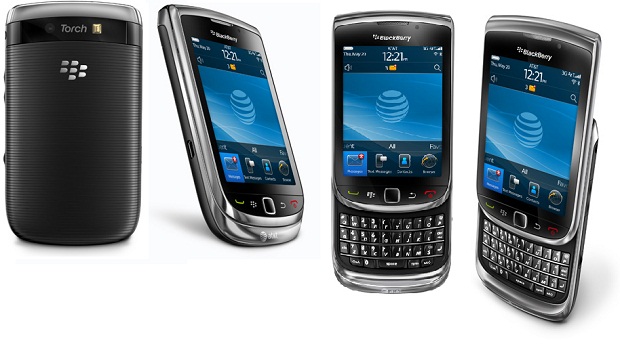
BlackBerry Torch 9800, The Ultimate Email Machine


The BlackBerry Torch 9800 gives me a weird feeling of travelling back in time, after a period of intense testing only touch smartphones, with their short battery life that doesn’t last more than just one day. Being able to use a phone whose 1300 mAh battery strongly endures a day of hard usage is really bringing some unexpected joy.

Key features

• Quad-band GSM/GPRS/EDGE
• 3G with HSPA support
• 3.2" 16M-color multi-touch capacitive touchscreen of 360 x 480 pixel resolution
• 5 MP autofocus camera with LED flash and VGA video recording
• BlackBerry OS 6
• Wi-Fi 802.11 b/g/n
• Built-in GPS with BlackBerry maps preloaded
• 4 GB internal storage and a hot-swappable microSD card slot
• Nice design and build quality
• 3.5mm standard audio jack
• Accelerometer sensor for screen auto-rotate
• Bluetooth v2.1 and microUSB v2.0
• Document viewer
• Optical trackpad
• Good audio quality
• DivX and XviD support


Full specs here.

In its box, you’ll find the charger, micro USB cable, headset, a 4GB memory card, and, instead of a leather case, a polishing cloth.
The phone comes loaded with the BlackBerry OS 6, which is clearly improved, looks quite nice and works just fine when multitasking. We also have a 624 MHz CPU Marwell, 512 RAM memory, 512 ROM and 4GB internal storage.
Measuring 111 x 62 x 14.6 mm with a weight of 161g, the Torch 9800 is a well-built smartphone, smaller than the majority of high-end models on the market, but only a little thicker. On the other side, it may seem quite big when the QWERTY keyboard is slided. The good part is that it can be easily used with one hand.
Without opening the keyboard, BB Torch 9800 looks even better: a flat surface with rounded edges on the front and no level differences between the display and case. I really appreciate the fact that the glass catching is done very well and the joint tracks are invisible.
The touch buttons for menu, back and receiving and rejecting calls are bordering the track pad, which is also touch. The lateral border is made of a well finished metal, which contributes to the elegance of the BlackBerry Torch 9800.
On the left side, we have the micro USB connector and on the right, the volume buttons, audio jack and camera button – they’re made of a rubberized-plastic material that offers a good adherence.
On the front we have the speaker and near it, a control LED which indicates the occurrence of events: new messages, missed calls, alarms.
Almost all of the back-side is covered by the battery cover (made of rubber) At the top are the camera (5MP) and the flash.
The usage of the QWERTY keyboard in optimal conditions is favored by the fact that the buttons have a small area of separation and the resistance to oppression is enough to not bear too much effort.
The BlackBerry Torch 9800 has a 3.2-inch touchscreen with a non-standard resolution of 480 x 360 pixels. The image on screen is seen almost the same from different angles, regardless of how you keep your smartphone. It has an accelerometer and automatically detects movement, properly orienting the screen image.

The touch is working pretty well on this phone, which you can use almost exclusively with the touch functions - only a few times (in the browser) I had to resort to the track pad for precise control. The brightness level doesn’t excel, thus the sunlight legibility is not so great.
The call quality is very good, the voices are loud and clear for both parties. Reception is fine too. The device provides speed and voice dialing.

As you probably know, the BlackBerry phones are masters when it comes to messaging, so, the Torch 9800 will be your best friend when using it for email, texting, instant messaging and all that.
Let’s talk about connectivity. The phone provides 3G with HSPA for great speed, Bluetooth with A2DP, Wi-Fi and quad-band GSM/GPRS/EDGE.
You’ll surely enjoy browsing the web with this phone, as it uses the WebKit engine. The pages are loaded very quickly, but, unfortunately, you don’t get any Flash support.
The device features a 5MP camera with LED flash and autofocus. Takes pictures at a maximum resolution of 2592Ñ…1944 pixels. The image quality is pretty fine, if you ask me.
The video recording is made at 640 x 480 with 24fps. I was a little disappointed.
When it comes to media, the phone does a great job. The music player has a nicer interface, if you compare it to the older ones; you have support for equalizers, audio boost, album art and formats like MP3, WMA, eAAC+,FlAC, OGG. The audio quality is exquisite.
The phone provides video support for DivX, XviD, MP4, WMV, H.263/H.264.Watching videos is also a nice experience.
BlackBerry Torch provides support for GPS, with A-GPS. For navigation, it has BlackBerry maps preinstalled.
For opening Word, Excel and PowerPoint files, you have everything you need preinstalled.
Feel free to socialize or talk all you want, for you’ll also find applications like Facebook, Twitter, MySpace, MSN, AOL, BlackBerry Messenger.

If you’re searching for the perfect device for emailing, texting and telephony, good news. The BlackBerry 9800 is the best option when it comes to these things and it’s also loaded with a decent camera, very good audio player and we mustn’t forget about the battery: that little fellow will hang in there for you even if you’re the phone-abusing type.

You can get one here, on a monthly contract deal.

continue reading "BlackBerry Torch 9800, The Ultimate Email Machine"